Anthropic Launches Claude Design, Claude Opus 4.7, OpenAI

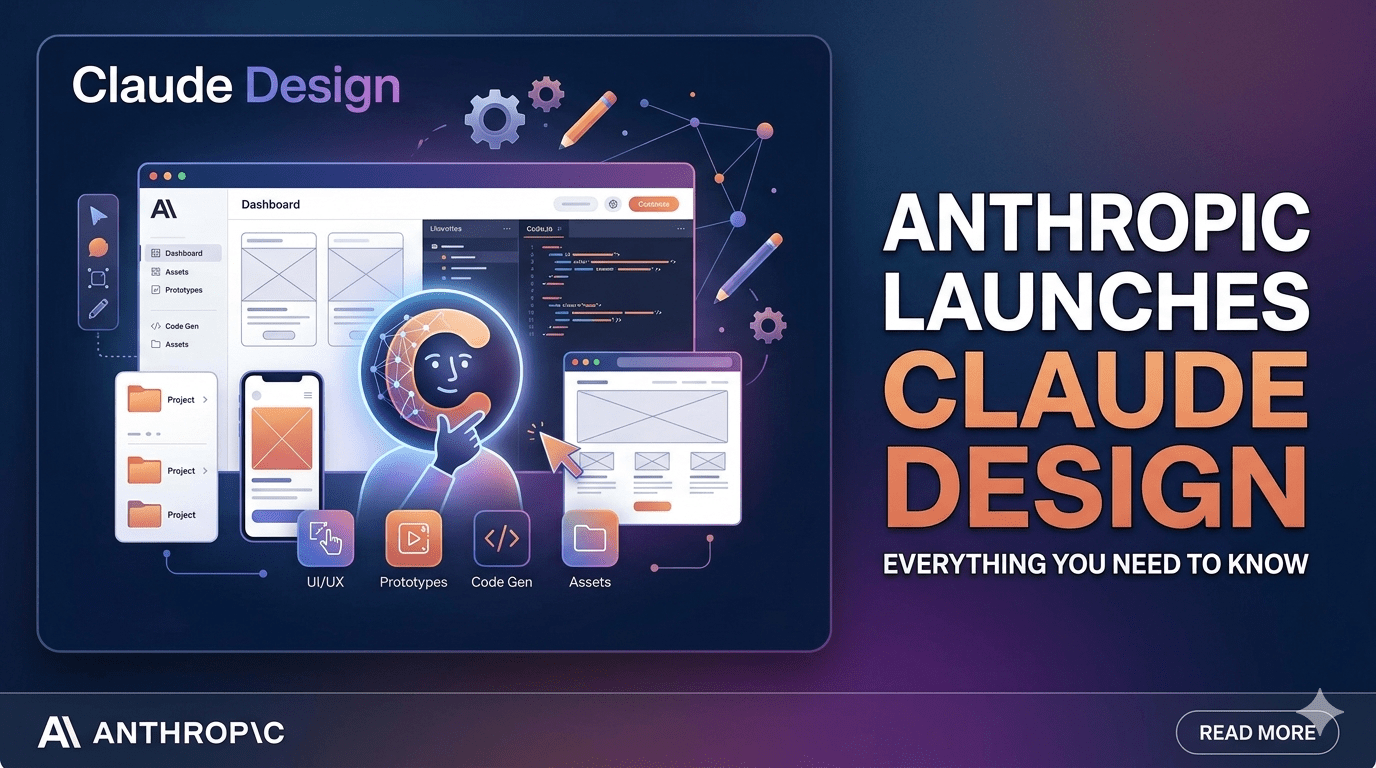
Anthropic Launches Claude Design: Everything You Need to Know

Anthropic Launches Claude Design: Everything You Need to Know

Are you a business owner grappling with inefficient design workflows and struggling to keep pace with rapid product development cycles? The constant need for high-quality visual assets and seamless developer handoffs can be a significant bottleneck, impacting your marketing efforts and overall business growth. This article dicusses Anthropic’s new product, Claude Design, offering a comprehensive guide to understanding its capabilities and how it can revolutionize your design process, providing the solution you’ve been seeking to streamline operations and enhance your creative output.

What Is Anthropic’s Claude Design and Why Is It Important to Design?

Anthropic just launched Claude Design, a groundbreaking artificial intelligence-powered design tool that promises to transform how businesses approach their visual work. Understanding what Claude Design offers and its significance for the design process is crucial for any enterprise looking to gain a competitive edge in today’s fast-paced digital landscape. This new product is set to make design more accessible, efficient, and integrated than ever before, marking a pivotal moment in AI-driven creativity.

Overview of Claude Design

Claude Design, an innovative AI design tool from Anthropic Labs, empowers users of all design backgrounds to create polished visual work with unprecedented ease. This powerful tool acts as a collaborative partner, enabling product managers, marketers, and designers to bring their visions to life through intuitive interactions and intelligent automation, making complex design tasks manageable for everyone on the team.

Feature Detail
Power Source Claude Opus 4.7
Capabilities Understands complex design instructions and generates sophisticated outputs

Key Features of Claude Design

The core of Claude Design’s appeal lies in its robust set of features. It includes a sophisticated web capture tool that can analyze existing websites or PDFs to understand design patterns. Users can provide a text prompt to ask Claude to create various design outputs, which can then be exported in multiple formats:

Design Output Export Formats
Mockups, One-pagers, or Entire Design Systems Standalone HTML files, PPTs, or PDFs

Furthermore, Claude Design is engineered to build integrations with Claude Code, facilitating a seamless handoff from design to implementation, making the entire product development lifecycle more fluid and efficient.

How Claude Design Differentiates From Other Tools

While other AI tools like Canva and OpenAI offer design assistance, Claude Design carves out a unique niche. It focuses on creating comprehensive design systems through its deep integration with Anthropic’s advanced AI models. Unlike tools that primarily offer templates or isolated graphic elements, Claude Design can intelligently build a design system based on a team’s design guidelines, ensuring consistency across all visual assets. Its ability to pass to Claude Code for implementation further distinguishes it, offering an end-to-end solution. Below is a comparison of Claude Design with competitors:

Feature Claude Design Competitors (e.g., Figma, Adobe)
Core Functionality Builds design systems based on guidelines Primarily offers templates or isolated graphic elements
AI Integration Deep integration with Anthropic’s AI models for intelligent design system creation AI-driven features may be present but not for end-to-end design and development workflows
Workflow Integration End-to-end solution, passes to Claude Code for implementation Does not provide the same level of integrated design and development workflows


How to Get Started with Claude Design

Embarking on your journey with Claude Design is straightforward, even if you are new to AI design tools. Anthropic has made Claude Design accessible, ensuring that users can quickly set up their accounts, familiarize themselves with the user interface, and begin creating prototypes without a steep learning curve. The following steps will guide you through the initial process, enabling you to harness the power of this new product for your design needs, from account creation to your first successful project.

Setting Up Your Claude Design Account

To begin using Claude Design, you first need to set up an account, which is currently available as a research preview for Claude Pro and enterprise subscribers. This involves navigating to the Anthropic website and following the registration prompts, which typically require an email address and some basic information to create your user profile. Once your account is active, you will gain access to the Claude Design platform, where you can start exploring its capabilities and integrating it into your existing design workflows with ease and efficiency.

Exploring the User Interface: Figma vs. Claude Design

Upon logging in, you’ll find that the Claude Design user interface is intuitively designed, though it might differ from traditional design tools like Figma or Adobe products. While Figma focuses on collaborative vector graphics editing, Claude Design emphasizes AI-driven generation and system building through text prompts. Users can ask Claude to generate designs, refine existing ones, and manage typography and visual components, moving beyond manual manipulation towards an AI-assisted creative process that redefines interaction with design software. This distinction is vital for understanding its operational philosophy.

Creating Your First Prototype Using Claude Design

Creating your first prototype with Claude Design is an exciting step into AI-powered design. You can start by providing a text prompt describing your desired mockup or one-pager, perhaps specifying a layout, color scheme, and key elements. Claude Design will then leverage its intelligence, powered by Claude Opus 4.7, to generate an initial design, which you can then refine by giving further instructions. This iterative process allows you to collaborate with Claude to create polished visual work, ultimately exporting your prototype as standalone HTML or PDF, ready for review and implementation, bridging the gap between concept and tangible output.

Integrating Claude Code for Enhanced Workflow

What Is Claude Code and What Are the Benefits of Claude Opus 4.7?

Claude Code is Anthropic’s innovative AI coding assistant, designed to seamlessly integrate with Claude Design to transform creative visions into functional code. Powered by the advanced Claude Opus 4.7, Claude Code offers significant benefits by generating clean, efficient code from design mockups, ensuring that the transition from a visual prototype to a live product is smooth and accurate. This integration accelerates development cycles, reduces manual coding efforts, and enhances collaboration between designers and developers, ultimately streamlining the entire product development workflow and allowing teams to build integrations more efficiently.

How to Handoff Your Designs to Claude Code

Handoffs from Claude Design to Claude Code are designed to be effortless, leveraging the deep integration between these Anthropic tools. Once you have created and refined your design in Claude Design, you can simply utilize the “handoff to Claude Code” functionality within the platform. This allows Claude Code to interpret the design system, layouts, and components, generating a corresponding codebase automatically. This streamlined process eliminates much of the traditional manual translation of design specifications into code, ensuring consistency and drastically speeding up development, moving seamlessly from a visual concept to a working prototype.

Best Practices for Using Claude Code with Claude Design

To maximize the efficiency and effectiveness of using Claude Code with Claude Design, several best practices should be followed. Ensure your Claude Design projects are well-structured with clear design systems and consistent typography. When providing a text prompt for Claude Design, be as specific as possible, detailing functional requirements alongside visual elements. Regularly review the generated codebase and design files from Claude Code to ensure they align with your project’s technical specifications and refine as needed. This collaborative approach with Claude will ensure high-quality outputs and a truly integrated design-to-development pipeline, creating polished visual work.

Comparing Claude Design to Other Design Tools

Claude Design vs. Figma: A Feature Comparison

While Figma excels as a collaborative vector graphics editor and prototyping tool, Claude Design distinguishes itself with its AI-first approach. Claude Design, powered by Claude Opus 4.7, can generate entire design systems from a text prompt, whereas Figma requires manual creation of components and styles. Figma’s strength lies in real-time team collaboration on design files, while Claude Design’s unique selling proposition is its ability to directly build integrations with Claude Code, automating the transition from visual design to a functional codebase. Both tools offer powerful features, but Claude Design offers an integrated AI solution.

Claude Design vs. Canva: Which Is Right for You?

Choosing between Claude Design and Canva depends heavily on your specific needs and design background. Canva is an intuitive, template-based graphic design tool ideal for quick, simple visual work, such as social media graphics and presentations, requiring minimal design expertise. Claude Design, as a new product from Anthropic, is built for more complex design challenges, capable of generating comprehensive mockups, one-pagers, and entire design systems through an intelligent text prompt. For businesses seeking advanced AI assistance to streamline product design and development, Claude Design offers a more robust and integrated solution than Canva.

Advantages of Using Claude Design Over Adobe Products

Claude Design presents significant advantages over traditional Adobe products like Photoshop and Illustrator, particularly in terms of automation and AI integration. While Adobe tools offer unparalleled granular control for professional designers, they often involve manual, labor-intensive processes. Claude Design, launched by Anthropic and powered by Claude Opus 4.7, automates many design tasks, allowing users to ask Claude to generate complex designs from simple text prompts and then pass to Claude Code for implementation. This end-to-end AI-driven workflow significantly reduces time-to-market and allows product managers to create polished visual work with unprecedented speed and efficiency.

Key Takeaways

Summary of Claude Design Features

Claude Design, a new product from Anthropic, redefines the design process with its AI-powered capabilities. Key features include a web capture tool for analyzing existing designs, the ability to generate entire design systems, mockups, and one-pagers from a text prompt, and seamless integration with Claude Code for development handoffs. It is powered by Claude Opus 4.7, ensuring intelligent and sophisticated outputs, and allows users to export designs as standalone HTML files, PPTs, or PDFs, making it an incredibly versatile and powerful design tool for various applications.

Benefits of Using Claude Design for Businesses

For businesses, Claude Design offers a multitude of benefits, primarily by streamlining the entire design-to-development pipeline. It significantly accelerates product development cycles, reduces the need for extensive design expertise within a team, and ensures design consistency across all visual assets by building a design system from the ground up. The ability to collaborate with Claude to create and refine designs, coupled with the efficient handoff to Claude Code, enables faster iteration and deployment, ultimately saving time and resources while enhancing the quality of your company’s visual work.

Why Choose The AD Leaf Marketing Firm for Implementation

Implementing a sophisticated AI design tool like Claude Design into your existing workflows requires expert guidance to maximize its potential. The AD Leaf Marketing Firm specializes in integrating cutting-edge AI marketing and advertising solutions for businesses of all sizes. Our team can help you leverage Claude Design to create polished visual work, optimize your design systems, and ensure seamless handoffs to development, guaranteeing that your investment in this powerful new product translates into tangible business growth and increased efficiency. Partner with us to unlock the full power of Anthropic’s Claude Design.

More About Agentic AI and AI Agent Development

Agentic AI Use Cases for Businesses

Agentic AI, exemplified by tools such as Claude Design, offers a transformative approach for businesses across various sectors. These AI agents, powered by advanced models like Claude Opus 4.7, can automate and optimize complex tasks that traditionally require significant human intervention. For instance, in marketing, agentic AI can generate sophisticated ad creatives, personalize customer experiences, and analyze market trends to inform strategy, all through an intelligent prompt system. This allows product managers and marketing teams to focus on higher-level strategic planning rather than repetitive operational tasks.

In product development, Agentic AI can revolutionize the prototyping phase. A business can ask Claude to create mockups or one-pagers based on a text prompt, rapidly iterating through design concepts. Furthermore, with the integration of Claude Code, these designs can be seamlessly converted into a functional codebase, accelerating the development cycle from concept to a tangible prototype. This capability to build integrations with Claude Design and Claude Code dramatically reduces time-to-market and enhances efficiency in creating polished visual work, allowing companies to respond faster to market demands.

Frequently Asked Questions | The AD Leaf Marketing Firm

What Is the Main Purpose of Claude Design?

The main purpose of Claude Design, a new product launched by Anthropic, is to democratize and accelerate the design process using advanced artificial intelligence. It empowers users, regardless of their design background, to create polished visual work, including mockups, one-pagers, and entire design systems, primarily through intuitive text prompts. The tool aims to streamline the workflow from conceptualization to implementation by offering seamless integration with Claude Code for efficient design-to-development handoffs, making it a comprehensive solution for modern businesses.

How Can I Export Designs from Claude Design?

Users of Claude Design can easily export their created designs in several versatile formats to suit various needs. Once you collaborate with Claude to create and refine your visual work, you have the option to export the output as standalone HTML files, PPTs, or PDFs. This flexibility ensures that the designs generated by Claude Design, powered by Claude Opus 4.7, can be readily shared with stakeholders, integrated into presentations, or used directly for web development, providing practical utility beyond just the design phase.

Is Claude Design Suitable for Small Businesses?

Yes, Claude Design is particularly suitable for small businesses, offering significant advantages by enabling them to produce high-quality visual work without the need for extensive in-house design expertise or expensive external agencies. With its user-friendly interface and the ability to generate designs from a simple text prompt, small businesses can create professional mockups, one-pagers, and even develop a consistent design system. This allows them to compete effectively in the market by rapidly developing compelling marketing materials and product prototypes, leveraging advanced AI tools from Anthropic.

How Does Claude Design Enhance Collaboration Among Teams?

Claude Design significantly enhances collaboration among teams by providing a common, AI-driven platform where product managers, marketers, and designers can articulate their visions using natural language prompts. The tool allows team members to ask Claude to generate initial designs and then collectively refine them through iterative text prompts. This fosters a more inclusive design process where feedback can be directly incorporated, and changes can be implemented swiftly. Furthermore, its ability to pass to Claude Code facilitates a smoother handoff between design and development, ensuring alignment across the entire project lifecycle.

Can I Use Claude Design Offline?

Currently, Claude Design, as a cutting-edge AI design tool powered by Claude Opus 4.7, requires an active internet connection to function. Its capabilities, including processing complex text prompts, leveraging its web capture tool, and generating sophisticated design files, rely on access to Anthropic’s cloud-based AI models. Therefore, to collaborate with Claude to create and refine your visual work, you will need to be online. There is no information suggesting an offline mode is available for the research preview or enterprise subscribers at this time.

What Are Common Issues Users Face With Claude Design?

As a relatively new product, users of Claude Design, while benefiting from its innovative AI capabilities, might encounter some common challenges. These could include occasional inconsistencies in design output that require further refinement via prompt adjustments, a learning curve in formulating effective text prompts to achieve desired results, and potential limitations in handling highly specialized or niche design requirements compared to traditional manual tools like Figma and Adobe. Additionally, as it is a research preview for Claude Pro and enterprise subscribers, access and specific feature availability might evolve.

Understanding Color Theory in Graphic Design and Marketing

Color theory serves as an essential cornerstone of graphic design, providing designers with a strategic framework to effectively convey ideas and emotions. This exploration delves into the fundamental principles of color theory and its practical uses in marketing, specifically in crafting visually appealing designs that establish robust emotional connections with consumers.

The Core Principles of Color Theory

Color theory is a structured framework that explains the intricate relationships between colors and the governing principles that regulate their interactions. By discerning the meanings and emotions associated with colors, designers can wield this knowledge to infuse their creations with intention and resonance.

Navigating Color Models

Color models are indispensable tools that aid in comprehending and manipulating colors. While several models like Red-Green-Blue (RGB) and Cyan-Magenta-Yellow-Black (CMYK) offer distinct perspectives, the focus here is on the Red-Yellow-Blue (RYB) model. This model, which consists of the primary colors red, yellow, and blue, is the fundamental basis of the color spectrum. The blending of these primary colors yields secondary colors such as green, orange, and purple, while the mixing of primary and secondary creates tertiary colors (Yellow-Green et al., etc.)

The Psychological Impact of Color

Beyond aesthetics, color wields a psychological influence, evoking diverse emotions and reactions. Research conducted at the University of Kansas highlights how red sparks excitement and arousal, while blue evokes a calming effect (Mehta & Zhu, 2009). Additionally, the Journal of Environmental Psychology underscores yellow’s association with cheerfulness and warmth and green’s affiliation with calmness and relaxation (Evans & David, 1999). This understanding enables designers to strategically employ color to evoke specific emotional responses from their intended audience.

Color Theory in Marketing Context

Color theory is of great importance in marketing. Findings published in the International Journal of Design emphasize the impact of color combinations on design effectiveness, underscoring the pivotal role of color harmony (Gedeon & Ling, 2018). Moreover, insights from the Journal of Marketing underscore color’s influence on brand identity and its potential to shape consumer perceptions and behaviors, underscoring its central role in marketing strategies (Aaker, 1997).

A Multicultural Lens

The complexity of color theory is further compounded by the need to understand cultural differences in how colors are interpreted. Colors have different meanings and connotations in different cultures, which adds to the power of color to communicate. For example, red symbolizes luck and celebration in Chinese culture but may signify danger or urgency in Western societies. This highlights the importance of designers considering the cultural context of their target audience to ensure that color choices resonate harmoniously and avoid unintended misinterpretations, thus enhancing cross-cultural communication.

Color theory is a key element of graphic design and marketing. By understanding the relationships between colors, their psychological impact, and how they can be used to create compelling designs, designers can create designs that resonate with consumers deeply. This synthesis of art and science allows designers to create emotional landscapes that will stay with consumers long after seeing the design.


The AD Leaf Can Help With Your Video Strategy!

At The AD Leaf Marketing Firm, we recognize the power of color theory in driving successful design and marketing strategies. Our dedicated team combines expertise and creativity to craft compelling visuals and campaigns that resonate with your audience. Whether it’s enhancing brand identity, fostering emotional connections, or ensuring cross-cultural relevance, we’re here to guide you. Partner with us to harness the full potential of color theory and propel your business toward a vibrant and impactful future. Together, let’s paint a picture of success!

References:

  • Mehta, R., & Zhu, R. (2009). Blue or red? Exploring the effect of color on cognitive task performances. Science, 323(5918), 1226-1229.
  • Evans, G. W., & David, L. (1999). Motivational consequences of environmental stress. Journal of Environmental Psychology, 19(1), 21-29.
  • Gedeon, C., & Ling, L. (2018). The impact of color combinations on the perception of a brand’s personality. International Journal of Design, 12(3), 11-20.
  • Aaker, D. A. (1997). Dimensions of brand personality. Journal of Marketing Research34(3), 347–356.
Your Fonts Matter

Your Fonts Matter

Typefaces can make a significant impact on the success of a project, especially in the world of graphic design and marketing. As a designer, it’s important to understand why Your Fonts Matter and how it can affect the overall perception of a brand or message.

First Impressions Count

The first thing people see when they come across a project is the font. The font can influence whether the reader continues to engage with the content or moves on to something else. The right font can grab the reader’s attention, making them more likely to stick around and absorb the content and help make a positive first impression.

The font used in a project can say a lot about the brand and its values. Different font styles can evoke different emotions, and choosing the right font can help convey the brand’s tone and personality. For example, a playful font (i.e., Earth Days, Playful Child, Artapa) may be appropriate for a children’s toy brand. In contrast, a more serious font (Calibri, Baskerville, Open Sans) may better suit a financial institution. A font can also help to reinforce a brand’s identity and make it easily recognizable to customers.

Readability

Readability is important in any project, and the right font can make a huge difference. A font that is too small or too fancy can be difficult to read and make the content less accessible to the reader. If the point of your writing is to be read, it should be legible where it will be read, print versus digital. Choosing a legible font can help ensure the reader stays engaged and doesn’t lose interest in the content.

Mood and Emotion

The font can also affect the mood and emotion of the content. For example, a heavy font can evoke a feeling of strength, while a more delicate, flowing font can evoke a sense of elegance. The font can also create a sense of urgency, helping to grab the reader’s attention and motivate them to take action. By choosing the right font, a designer can help control what emotions the customer/viewer feels while interacting with the brand making it more effective in communicating the brand’s message.

Accessibility

The importance of accessibility is quickly growing in importance in any project, and the right typeface can play a significant role in making the content accessible to all. A font that is too small or elaborate can be difficult to read, particularly for those with visual impairments. By choosing a font that is easy to read and legible, designers ensure everyone can engage with the content.

Choosing the right font is crucial in any graphic design or marketing project. The font can significantly impact the project’s success, influencing the reader’s perception of the brand and its values, the readability of the content, and the mood and emotion it conveys. By understanding the importance of the right font, designers can help create projects that effectively communicate the brand’s message and make a lasting impression on the reader.

Why The AD Leaf?

Don’t get lost just choosing that random typeface because you like how it looks or because you saw it being used by a reputable company and think that because it worked for them, why won’t it work for you? Our team of trained and experienced designers knows what and why a specific font works (and so much more.) Talk to one of our experts to schedule a free consultation with our marketing teams; call us today at 321-255-0900.

Does Your Small Business Have a Brand Guide? 

Does Your Small Business Have a Brand Guide? The SEVEN Reasons why you should.  

When starting a small business, it’s easy for you to have the mentality of “jumping right in.” You want to complete and do everything to feel like you are up and running as quickly as possible. While doing all of these things can be an important factor in becoming visible to potential customers, what is more important is slowing down to ensure you are creating a branding guide for your small business. This task is often a task that is skipped and looked over. A branding guide should be the base of your business, and you can create around this guide. This step can be a step that small businesses skip, but if you take the time to complete this in the beginning, you can find yourself more successful in the long term. Here are the top 5 reasons your small business should have a branding guide. 

Does Your Small Business Have a Branding Guide?

In today’s crowded market, small businesses face the daunting challenge of standing out against competitors with bigger budgets and broader reach. If you’ve ever felt like your business is struggling to find a clear, cohesive identity—you’re not alone. Many small business owners find themselves jumping from one creative idea to the next, only to realize their brand lacks consistency. This inconsistency can confuse your audience, dilute your message, and ultimately, hurt your bottom line.

But what’s the solution? Enter the branding guide—a powerful tool that can help your business establish a cohesive creative direction, communicate your unique value, and build stronger connections with your customers. Let’s dive into the common challenges small business owners face when trying to nail down their brand identity and how a branding guide can solve those issues.

The Pain Points of Undefined Branding

1. Your Visuals Are All Over the Place

One week, your social media posts are pastel and minimalist; the next, they’re bold and colorful. Your website has one logo, but your packaging features a different variation. If this sounds familiar, it’s a sign that your visuals lack cohesion. This can make your business appear unprofessional and leave potential customers questioning your credibility.

2. Inconsistent Messaging

Your tagline changes depending on the platform, and your tone of voice fluctuates between playful and formal. Without a clear message, your audience won’t know what you stand for or why they should choose your business over others.

3. Wasted Time and Resources

Every time you create new marketing materials, you’re starting from scratch. This constant reinvention wastes valuable time and resources that could be better spent growing your business.

4. Difficulty Standing Out

Inconsistent branding makes it harder for your business to carve out a unique identity in a crowded market. If your customers can’t immediately recognize your brand, you’ll struggle to build loyalty and trust.

Why Your Small Business Needs a Branding Guide

A branding guide is more than just a document; it’s a roadmap that outlines your brand’s identity, visuals, and messaging. It ensures consistency across all channels and helps you create a memorable and impactful brand. Here’s what a comprehensive branding guide typically includes:

  • Mission and Vision Statements: Define your purpose and long-term goals.
  • Target Audience: Identify who you’re speaking to and their needs.
  • Brand Voice and Tone: Outline how your business communicates with its audience.
  • Logo Usage: Specify how and where your logo should appear.
  • Color Palette: Choose a set of colors that represent your brand.
  • Typography: Select fonts that align with your brand’s personality.
  • Imagery and Photography Style: Determine the look and feel of your visuals.
  • Guidelines for Marketing Materials: Provide templates or examples for social media, email campaigns, and other collateral.

Actionable Tips for Nailing Down Your Creative Direction

1. Start with Your “Why”

Why did you start your business? What problem are you solving for your customers? Your mission and vision should be the foundation of your branding guide. By articulating your purpose, you’ll have a clear direction for your creative efforts.

2. Understand Your Audience

Who are your customers? What are their pain points, preferences, and values? Conduct market research, create customer personas, and use these insights to inform your branding decisions.

3. Audit Your Existing Materials

Take stock of your current branding assets, including your logo, website, social media posts, and marketing materials. Identify what’s working, what’s not, and where inconsistencies exist. This audit will serve as a starting point for creating a more cohesive brand.

4. Define Your Visual Identity

  • Choose a Color Palette: Select 3-5 colors that evoke the emotions you want your brand to convey.
  • Pick Your Fonts: Use 1-2 primary fonts for your logo and marketing materials, plus a secondary font for body text.
  • Establish Imagery Guidelines: Decide whether your brand will use bold illustrations, professional photography, or candid shots.

5. Craft a Consistent Voice

Whether you’re posting on Instagram or responding to a customer email, your tone should feel authentic and aligned with your brand. Define key attributes of your voice (e.g., friendly, authoritative, witty) and stick to them across all communications.

6. Create a Brand Style Guide Document

Compile all the elements of your branding into a single, easily accessible document. This guide should be shared with your team, freelancers, and anyone else who contributes to your marketing efforts.

7. Test and Refine

Branding is an evolving process. Gather feedback from your team and customers, track the performance of your marketing efforts, and make adjustments as needed to ensure your branding resonates with your audience.

How a Branding Guide Helps You Stay Consistent

With a branding guide in hand, you’ll:

  • Save time by eliminating guesswork in your marketing efforts.
  • Build trust and recognition with your audience through consistent visuals and messaging.
  • Empower your team to create on-brand content with confidence.
  • Stand out in a crowded market by presenting a polished, professional image.

Let’s Elevate Your Brand Together

At The AD Leaf, we understand the challenges small businesses face when trying to define their brand. Our team of experts can help you create a custom branding guide that not only captures the essence of your business but also sets you apart from the competition.

Don’t let inconsistent branding hold you back. Partner with The Ad Leaf to elevate your small business branding and stand out against the noise. Contact us today to get started on your journey to a stronger, more cohesive brand identity.

Problems That Graphic Design and Good Branding Can Help Solve

“There are three responses to a piece of design – yes, no, and WOW!

Wow, is the one to aim for.”

Milton Glaser

Problems that Graphic Design and Good Branding Can Help Solve: Time

The old wives’ tale that time is money has never been so true when talking about running or owning a small business. You find yourself constantly looking for ways you can save time. Graphic Design and Good Branding can help save you this time. Although Graphic Design, Logo Design, and Branding can seem daunting at the beginning of your business venture, doing this leg work can save you time in the future when you are getting prospective clients or customers to buy or sign up for your services.


If prospective clients or customers are reaching out and asking what your services are, this could indicate that they might have a problem with your presentation or your brand. Your presentation always leads back to your branding. For example, you might be taken aback when you first look at the Portland Trailblazers logo. Their name implies “trailblazer” (a type of horse), but their logo doesn’t look like a horse. Although the actual meaning behind the logo is significant, it implies five players on one side, playing or interacting with five players on the other side. It, unfortunately, doesn’t read easily and can be quite confusing.

Having a logo with the meaning behind it is always great, but it also lets consumers know who you are and what you do. When you combine both aspects (who you are and what you do) into your branding, you are on the right path to saving time and getting right down to the fun part, business. 

The phrase “time is money” has never been more relevant than when running or owning a small business. You’re always searching for ways to be more efficient. Strong branding and thoughtful graphic design can help streamline your efforts. While tasks like logo design, branding, and overall graphic design may feel overwhelming at the start of your business journey, investing time in these areas early on can save you valuable time later when attracting potential clients or customers to your products or services.
If prospective clients or customers are reaching out and asking what your services are, this could indicate that they might have a problem with your presentation or your brand. Your presentation always leads back to your branding. Have you ever noticed the Apple Logo?

The bitten apple actually has meaning, it signifies taking a bite out of the tech industry, as well as being representative of knowledge.

Then there is FedEx. The arrow, hidden within the space between the letters, the negative space, gives illustration to forward movement.

The connecting arrow from “A” to “Z” showcases a wide range of products.

Nike’s Swoosh is indicative of motion and speed. 

Having a logo with the meaning behind it is always great, but it also lets consumers know who you are and what you do. When you combine both aspects (who you are and what you do) into your branding, you are on the right path to saving time and getting right down to the fun part, business. 

Problems that Graphic Design and Good Branding Can Help Solve: Standing Out From your Competitors


Starting or managing a small business is both exciting and intimidating. Whether you’re selling products or offering services, one essential factor remains the same—you need customers or clients. If you own a roofing company but are competing with fifteen others in your area, what sets you apart? What makes a potential customer choose your business over the rest?

Standing out in a crowded market can be challenging. Take roofing companies, for example—most people don’t think about roofing services until they urgently need one, often due to a leak before or after a storm. In that moment of panic, brand recognition becomes crucial. Do you have a memorable logo, a catchy jingle in your ads, or a strong brand presence that reassures customers you can solve their roofing issues? Recognition is the key to differentiation. Does your brand have a cohesive look across all marketing platforms? Are you consistently reinforcing your brand identity? When faced with an urgent need, customers are more likely to choose a company that presents itself professionally and consistently proves its reliability. 

Problems that Graphic Design and Good Branding Can Help Solve: Becoming and/or Being Memorable

At this stage in your business journey, you have clients, but now the goal is to keep them coming back. Is your business memorable? Is your logo distinctive? While great customer service plays a key role in retaining customers, can you rely on that alone? Think about well-known coffee shops—most people immediately think of Starbucks. They offer excellent service and quality coffee, but they also stand out because of their strong, consistent, and recognizable brand worldwide. Now that you’ve established brand recognition, it’s time to focus on consistency to reinforce your business’s presence and keep customers returning.

Road trips are one of my favorite pastimes. I love to travel. While traveling, I am normally looking to stay awake. I correlate staying awake with coffee. While traveling, the only symbol that I look for on the interstate is the Starbucks logo. I don’t even need the “Starbucks” typography written below it. I know the logo because they are consistent. When I see it, I recognize it right away. I know who they are, what they sell, that they have great coffee, and who doesn’t like it. With Graphic Design and Good Branding, you can also be on the right track to attracting your customers and becoming memorable.

Why The AD Leaf? – 3 Problems that Graphic Design and Branding Can Help Solve

With these three problems solved for your business, you can now focus on the task at hand, running your business. At The AD Leaf ®, we can create any design that any company would be proud of and continue to use in the future to save you time, stand out from your competitors and become memorable with their clients or customers. For more information about our graphic design Melbourne, FL solutions, contact us at info@theadleaf.com or call 321-255-0900.

The Pitfalls of a Bad Logo Design

The Pitfalls of a Bad Logo Design


Everyone has a face, and that face, whether fair or not, is the first step to gaining trust. So we shave, cleanse, and smile to put our best foot forward to build loving, trusting relationships. The same should be brought into your business utilizing graphic design. However, what exactly is a logo and or trademark? Who is a trusted source to bring a face to your company? No matter your product or company size, a bad logo is the most expensive asset you could ever obtain. A poorly designed brand or logo can make or break a company.

What comes to mind when I say Nike? The Swoosh. What comes to mind when I say McDonald’s? The golden arches. Even though I stated the singular name of the company, you unconsciously accepted both a trademark and a logo. As in the case of NIKE’s branding, the Swoosh is the trademark, and the lettering/typeface is the actual logo. The logo comes from the ancient Greek ‘Logos’ meaning word. As you can see in our modern society, the two have become almost interchangeable.

Many people, to their detriment, regard the logo as secondary in nature to the running of the business itself. They have an image of something they feel would properly represent themselves as an entity. A graphic designer takes the client’s good intentions and makes that message palatable and inviting across all platforms. Building trustworthy relationships between client and designer and client and their consumers. However, you might never see your business’s true value or highest potential until you trust a real designer to find the true motivation, direction, and audience behind the company.

Hiring the right designer or agency to market your company is important as a business owner.

A poorly rebranded logo or a bad logo can destroy a company. I tell my clients that if they have a poor logo that doesn’t properly convey the value of their business, everything their logo touches is a waste of money. Most people, in this case with little to no understanding of the issue, believe they just need to be put more in the spotlight, so they throw more money at the problem, not realizing they are plastering the problem to everyone on everything speeding up the demise of their company.

No matter how big or successful your company is, nothing is more expensive than a bad logo design. A logo or trademark that is simple, elegant, and projects the full spectrum of the value you provide is an investment that will allow you to focus and scale beyond your goals and not hinder you to the pages lost in chapter 11. You should run your business with the help of a seasoned, trusted marketing agency.

The AD Leaf Can Help!

Contact us today to help develop and implement any Graphic Design needs your business might need! Talk to one of our experts here at The AD Leaf by clicking here! To schedule a free consultation with our team, call us today at 321-255-0900.

How Graphic Design Benefits Your Business

How Graphic Design Benefits Your Business

How can Graphic Design help my local business? This a great question that all local business owners should ask themselves! Some people might think that graphic design services are trivial for your business. That’s not true. The correct graphics and visuals for your company can help sell your product more efficiently than any amount of words can. It’s a matter of having the correct guidance to walk you through your company’s (re)branding, and The AD Leaf® can be that guidance.


How does Graphic Design Benefits Your Business As A Good Introduction

Local businesses’ number one goal is to give their customers the best services to increase their sales and, in turn, their revenue. Also, it increases the chance of a customer becoming a recurrent customer. But first, they must have a good introduction and impression.

Look at your logo and branding. Do they speak volumes about your company? Do the logo, colors, and imagery tell a story about your company when it was created, about how it currently is? First impressions are important to everyone, especially to customers.

Say there are two businesses next to each other, one with great branding that fits with how you feel the company should be represented and another with unappealing branding that feels relatively out of place. Which company would you likely check out first? And that is where graphic design comes into play. That’s where The AD Leaf® comes into play, our goal is to create the face of your company, and with our tools and knowledge, we’ll create the perfect logo, design, and branding that represents your company and the story that you want to share with your customers.

How does Graphic Design Benefits Your Business? – By Building Trust

Look at some of the biggest brands: AppleTargetCoke, etc. Their logos and brand don’t just work; they relate what they do and how they do it to you, with only a look. 

Apple, with their straightforward apple with a bite taken out of it, often without “Apple” written anywhere near it. Stark, high-contrast designs with their product given the spotlight. Target’s target is to let you know that you have hit a bullseye by being there. The abundance of white allows the strategic use of red to convey energy and draw your eyes around the store. Both of the previous designs have been reworked over the years. On the other hand, Coca-Cola has had the same logo since 1891 and the introduction of its red in 1934. Keeping their longstanding branding tells customers they know what to expect; Coke is the same today as it was yesterday and will be tomorrow.


Graphic Design Puts Your Customers First

There was a time when there was no internet and no smartphones. Customers had to go to companies to seek information and to inquire if they would a great deal for the products or services that the company provided for their money. Not any longer. Today, you, as a local business, should always put your customers first. Again, we do this by having eye-catching graphic designs. You must realize that it’s not only to make your company look good but also to solve your customer’s problem and make the sales process seem effortless. A well-designed website will make it much easier for your customers to understand how you can serve them without them knowing it. Our graphic design team understands human psychology, and we know how to implement our knowledge through our graphic design skills.

Conclusion

Throughout the years, there have been different ways to get your customer’s attention and support; having a great product, superb customer service, or the best prices all work to turn a one-time customer into a repeat customer. Branding has been a primary way, since the 1500s, to turn that person into a customer. Today, as a local business, you should always put your customers first. Again, we do this by having eye-catching graphic designs. You must realize that it’s not only to make your company look good but also to solve your customer’s problem and make the sales process seem effortless. A well-designed website will make it much easier for your customers to understand how you can serve them without them knowing it. Our graphic design team understands human psychology, and we know how to implement our knowledge through graphic design skills.

If your business needs graphic design services, contact The AD Leaf® by clicking here or calling us directly at (321) 255 0900, and we will happily work with you to drive your company to the number one spot in style.

How does graphic design services elevate my business?

How Does Graphic Design Elevate My Business?


In today’s highly competitive business world, it’s more important than ever to make an excellent first impression. One of the most important ways to do that is through graphic design services. Whether it’s creating a logo, designing a website, or developing an advertising campaign, graphics can help your business stand out from the crowd. 

But What Are Graphic Design Services?

Design is all around us, in the logos we see on products in the store, on the websites we visit, and in the apps we use on our phones. It’s everywhere, and it’s an essential part of our modern world. But what is graphic design, and why do we need it?

At its best, graphic design is all about creativity and communication. It’s about finding new ways to capture people’s attention and communicate your message in a way that is both visually appealing and memorable.

Design is all around us, in billboards, logos, packaging, and more. It’s a crucial part of marketing, as it helps to communicate information about a product or brand in a visually appealing way. Graphic designers use their creativity and technical skills to create designs that are both eye-catching and informative.

It is the art of creating visual content to communicate messages. It involves a creative and systematic plan to solve a problem or achieve specific objectives using images, symbols, or words. Graphic designers use various methods to create and combine words, symbols, and images to create a visual representation of ideas and messages. They may use typography, visual arts, and page layout techniques to create graphics. Typical uses of graphic design include identity (logos and branding), publications (magazines, newspapers, and books), advertisements, product packaging, and websites.

In short, graphic design can help you reach your target audience and achieve your business goals. So if you’re looking to give your business a boost, consider investing in some good graphics.

How Do Graphics Benefit My Business?

Good graphic design art can set your business apart from the competition. By creating a visually appealing brand, you can communicate your company’s values and mission to potential customers.

In today’s world, first impressions are more important than ever, and a well-designed logo or website can make all the difference. Graphic design can also help target specific markets, as different demographics respond to different images and messages.

With the help of a skilled designer, you can create marketing materials that will reach your ideal customer base and help your business to grow.

Why Do I Need Graphic Design?

Graphic design is essential for businesses of all sizes. From start-ups to established companies, a professionally designed logo and website help to create a solid and recognizable brand. Design assets can also be used to produce marketing materials such as brochures, flyers, and posters, which can help to raise awareness of your business and attract new customers. 

There are many reasons why graphics are essential. For businesses, it’s a way to stand out from the competition and attract customers. For individuals, it can be a way to express themselves creatively. And for society as a whole, it can be used to communicate messages of importance (such as public service announcements or awareness campaigns). Whatever the reason, graphic design plays a vital role in our world today.

By investing in graphics, you can give your business the competitive edge to succeed. 

94% of first impressions people make on your company are based on graphic design.

Examples of Assets:

  • Logos
  • Business Cards
  • Print Design (flyers, billboards, letterhead, signage, and banners)
  • Web Advertisements
  • Promotional Item Design (apparel, pens, koozies, etc.)

Graphic Design Assistance

Good design is imperative to a company’s branding and marketing strategy. It can create trustworthiness with customers and help to set your business apart from the competition. If your business needs graphic design, The AD Leaf can help. We have years of experience creating beautiful, compelling graphics that reflect the essence of businesses. Contact us today at 321-255-0900 or email info@theadleaf.com and ask about our graphic design services.

logo design

How a Good Logo Defines Your Business

Wondering how a well-designed logo will benefit your business? Every business needs a logo to be successful, but having a professionally designed logo one will help propel your business to success. Having an established logo is worth every penny of the investment. In fact, 50% of consumers are more likely to patronize a brand with a logo that they recognize. 

Logo design is essential to branding. The logo tells it all: what your brand does, represents, and values. It shapes how people perceive you and your business, which in turn impacts their experience with the product or service that you offer them – be it through words on an advertisement or website page. Anything that has your logo on it impacts the consumer in one way or another.

When people say “not to judge a book by its cover,” they usually do anyway, and logo design is the same. The logo for your business needs to be impactful and memorable, as it sets the tone for the rest of your brand. There’s a reason people can remember logos from big brands instantly. 

An unprofessional-looking logo can also damage customer confidence, as they may question how well you will deliver on products or services rendered at their request.

So, what aspects of a logo should you consider?

Color

A brand color palette also plays an integral part in branding, as it creates a visual experience for the consumer. Think of the most iconic brands: that specific blue linked to a particular jewelry store, or yellow golden arches, a blue arrow. Those brands come to mind immediately without even having to say the name.

The color of your brand is not something to take lightly. Colors can help shape mood and subconsciously shape action. For example, blue invokes honesty, loyalty, and trustworthiness, whereas yellow relates to cheerfulness, serenity, and warmth. 

Not only is the color important, but the saturation of colors is another aspect to take into account. Saturation is how vibrant or dull a color looks. Fully saturated colors are in their purest form, rich and bright, while low saturated colors will look more gray and dull.

Your logo should be viewed on light and dark backgrounds, over pictures or video, and on your products. This is why having variations of your logo (black, white, and full color) is vastly important.

Symbol

Something as simple as an apple or the letter “f” has been turned into some of the most recognizable logos in the world. 

When creating a logo, look in the direction of simplicity. Not only will it help the consumer remember the logo better, but it is more visually appealing than a cluttered logo that looks like it has been designed with no intention in mind. Consumers will know that you are serious about your brand and them.

Type

Typography is more important than people realize. Choosing a font for your logo can be challenging but worth it in the end. It may seem tedious when a graphic designer sends logo variations with nearly identical fonts, but type plays a crucial role in overall branding.

The type should not only reflect your brand, but it should be visually appealing as well. Careful arrangement of typography ensures that your design is well-organized and makes it more engaging. Considering different aspects like font selection, color contrast between blocks and fonts, and blank space produce a better visual experience with users.

Readability is a crucial factor when choosing a type for your logo. Script, display, and gothic fonts tend to be harder to read, while serif and sans-serif fonts are easier to read.

Logo Design and Branding Assistance

A well-designed logo is a vital part of any company’s branding and marketing strategy. It can create trustworthiness with customers and help to set your business apart from the competition. If you need a new logo or want to update your old one, The AD Leaf can help. We have years of experience creating beautiful, simple logos that reflect the essence of your business. Contact us today at 321-255-0900 or email info@theadleaf.com and ask about our Graphic Design services.

photos

Stock Photography: Silent Brand Killer or Time-Saver?


As a business owner, there’s a myriad of decisions that fall on your shoulders from financial decisions to branding decisions. At the end of the day, you may find yourself wanting to slap on any photos for marketing to pair with your social media posts. But before you press that “Post” button, let’s dive into the Stock Photography vs. Original Photography debate.

First things first, why can’t we simply copy and paste any photo from the world wide web? 

Avoiding Copyright Infringement

The photos that we see on online publications are copyrighted and are unable to be used for commercial and marketing use. Using these photos without the permission of the photographer, company, or publication could result in a hefty fine or further legal action. This is typically when companies look to stock photography. Let’s look at the pros and cons, shall we?


The Pro’s and Con’s of Stock Photography

Stock Photography can be a great tool to lean on when deadlines are tight. It can save you an hour’s time of messing with a camera and worrying about copyright when you just need two posts worth of photos. Sprinkling in quality stock photos to buff up your volume of content certainly won’t damage your brand credibility, however, it’s important to sift through stock photography libraries. If the image isn’t blending in with the rest of your content or branding it’ll stick out like a sore thumb. We’ve all seen those generic photos of a group of “business associates” that are giving their best faux laugh with a thumbs up. 

The last thing you want when a consumer comes across your marketing content is generic. It cancels out your credibility of providing customized customer relationships and takes away the originality of your brand that you’ve worked so hard to build. Furthermore, nothing is more embarrassing for a company than when they realize their landing page has the same smiling employee as a competitor company in another state. With the public consuming so much content in a day, you’ll be surprised at how quickly consumers of all ages can spot stock photography usage. 


The Pro’s and Con’s of Original Photography

Many business owners think that the option of original photography is an expensive and time-consuming process searching for the right photographer. Websites, such as Fiverr, are a great place to find photographers! You’ll be able to analyze their style, read reviews from past clients, and even find a product photographer for as little as $30. Think of this as a legal investment now that you’ll have complete ownership of photos that you’ll be able to use more than once. Working with a photographer will also assist in expanding your brand aesthetic that consumers can recognize without seeing your company’s name. These photos can present your service or product in your perspective. This is a part of laying down the foundation for building trust and familiarity with customers. 

Due to the majority of people having a smartphone, there’s no reason to not have photos of your product or your employees in action while they carry out a service. By typing in “Basic Smartphone Photography” on Youtube, you’ll be provided with countless quick lessons on how to take the proper photo. Allow yourself to present your own point of view and indulge in your inner creative.


Stock Photography vs. Original Photography

 In the end, your own photos for marketing will perform better than stock photography. A while back we had a client that was reluctant to provide his Social Media Specialist with photos of his employees while they were working but was unsatisfied with the performance of their social media platforms. They finally decided to send one photo and amazingly enough, the response and engagement were twice that of any previous stock imagery the Social Media Specialist has used in the past. 

A study recently conducted by “Marketing Experiments” compared the response of consumers to a stock image of a woman vs a picture of a company’s founder. Consumers were 35% more likely to sign up for a free consultation when the founder’s photo was used. Even though it wasn’t likely that visitors would be conversing with the founder, they were able to connect with a real person from the company.

All in all original photography not only saves you money in the end but is a testament to your commitment to being a trustworthy, premium content company. There’s no need to ban stock photography from your marketing content, but you’ll find the best engagement success online with photos taken by you or by a professional. 

Still intimidated by the decision on which images to use? At The AD Leaf ®, we have a team of Social Media Specialists who thrive off of cultivating premium content for a variety of businesses. Let’s work together on expanding your company’s presence online! Give us a call at (321) 255.0900 or, set up a consultation by emailing us at info@theadleaf.com. We look forward to hearing from you soon!