The AD Leaf Reviews

The Importance of Google Reviews for Your Business: How Reviews Impact SEO, Reputation & Growth

The Importance of Google Reviews for Your Business: How Reviews Impact SEO, Reputation & Growth

When was the last time you searched for a business on Google before deciding whether to contact or visit them?

For many consumers, Google Search and Google Maps are the first places they look when researching a local business. Before making a purchase, booking an appointment, scheduling a service, or visiting a location, potential customers often look at a business’s Google reviews, star rating, recent feedback, and responses from the business owner.

That makes Google reviews much more than a collection of customer comments. They are an important part of your business’s online reputation, local search presence, customer experience strategy, and digital marketing efforts.

Google itself says that reviews can help businesses stand out and provide potential customers with useful information. Reviews appear alongside Business Profiles in Google Search and Google Maps.

For businesses competing in crowded local markets, actively managing Google reviews should be an important part of an overall digital marketing strategy.


What Are Google Reviews?

Google reviews are customer-generated ratings and written feedback associated with a business’s Google Business Profile.

Customers can leave a star rating and, depending on the situation, provide written comments, photographs, and other information about their experience.

These reviews can appear when someone searches for a business on Google or discovers it through Google Maps.

For example, someone searching for:

  • Marketing agency near me
  • Dentist in Orlando
  • HVAC company in Las Vegas
  • Chiropractor near me
  • Best restaurant in Melbourne, FL
  • Auto repair shop near me

May encounter several businesses with different ratings, review counts, and customer comments.

That information can influence which business the searcher ultimately chooses.


Why Are Google Reviews Important?

Google reviews can influence several important areas of your marketing strategy:

  1. Customer trust
  2. Online reputation
  3. Local search visibility
  4. Click-through and engagement
  5. Customer conversion decisions
  6. Brand credibility
  7. Customer feedback and business improvement
  8. The information potential customers, and increasingly AI systems, use to understand your business

Reviews don’t replace a strong website, quality content, a properly optimized Google Business Profile, or an effective SEO strategy. Instead, they work alongside those elements to create a stronger overall digital presence.


1. Google Reviews Build Customer Trust

Trust is one of the biggest reasons reviews matter.

Think about the last time you were considering spending a significant amount of money with a company. You probably wanted to know what other customers experienced before making your decision.

Potential customers can use reviews to learn about:

  • Quality of products or services
  • Customer service
  • Communication
  • Professionalism
  • Pricing and value
  • Reliability
  • Wait times
  • Overall customer experience

A strong collection of authentic reviews can provide third-party validation that your marketing materials cannot create on their own.

Your website can tell potential customers that your company provides excellent service.

A customer review can demonstrate that another person actually experienced that service.

That distinction can be powerful.


2. Reviews Can Strengthen Your Local SEO Presence

Google reviews are particularly important for businesses that depend on local customers.

Your Google Business Profile is an important part of how your business appears in Google Search and Google Maps. Reviews are one of the prominent pieces of information consumers can see when evaluating businesses in local search.

However, it is important to understand that reviews are not a magic ranking factor that automatically puts a business at the top of Google.

Local search visibility depends on multiple factors, including the relevance and quality of your business information, prominence, website signals, links, content, location, and other aspects of Google’s local search systems.

Reviews are one component of that larger ecosystem.

Maintaining an active, authentic review profile can help strengthen your business’s overall reputation and provide useful information to both consumers and Google.


3. Your Reviews Can Influence Whether Someone Clicks on Your Business

Imagine two businesses appearing in a local search:

Business A

  • 4.8 stars
  • 325 reviews
  • Recent customer feedback

Business B

  • 3.7 stars
  • 42 reviews
  • Few recent reviews

Even if both businesses offer similar services, many consumers will naturally investigate Business A first.

Your review profile can therefore influence the next step a customer takes after discovering your business.

A person may:

  • Visit your website
  • Call your business
  • Request directions
  • Submit a lead form
  • Book an appointment
  • Visit your physical location
  • Compare your business against competitors

The review itself doesn’t complete the sale. It can help move the customer further into the buying process.


4. Recent Reviews Matter

Having hundreds of reviews is valuable, but businesses should also pay attention to recency.

A company may have accumulated hundreds of reviews over many years, but potential customers may still want to know what customers are saying today.

Recent reviews can provide insight into your current:

  • Customer service
  • Staff
  • Products
  • Services
  • Business operations
  • Customer experience

This is one reason businesses should build a consistent review-generation process instead of asking customers for reviews only once every few years.

The goal isn’t to manufacture reviews.

The goal is to consistently make it easy for real customers to share their genuine experiences.


5. Responding to Reviews Shows Customers You Care

Getting reviews is only part of reputation management.

Businesses should also monitor and respond to their reviews.

Google recommends responding to reviews and notes that public responses can help businesses build relationships with customers. Google also recommends keeping responses professional, relevant, concise, and conversational.

A response to a positive review could be as simple as:

Thank you for taking the time to share your experience! We’re glad our team was able to help and appreciate your business.

For a negative review, avoid becoming defensive or argumentative.

Instead:

  1. Acknowledge the customer’s concern.
  2. Remain professional.
  3. Avoid sharing private customer information.
  4. Explain what you can do to address the issue.
  5. Encourage the customer to contact the business privately when appropriate.

Remember that your response isn’t only for the person who wrote the review.

Future customers may read it too.

A thoughtful response to a negative review can demonstrate professionalism and customer service.


6. Negative Reviews Aren’t Always Bad

No business wants negative reviews.

However, a business having a mixture of positive and negative feedback isn’t necessarily a problem.

In fact, Google notes that honest and balanced reviews can help potential customers make decisions, and that negative feedback can provide businesses with an opportunity to understand customer expectations and improve.

The key is how you respond.

A legitimate negative review can give your business an opportunity to demonstrate:

  • Accountability
  • Empathy
  • Professionalism
  • Responsiveness
  • A commitment to improvement

At the same time, businesses should monitor reviews for content that violates Google’s policies.

If a review violates Google’s policies, for example, because it contains spam, prohibited content, or other policy violations—you can report it to Google for review.

You should not attempt to remove legitimate negative reviews simply because you don’t like them.


7. Don’t Buy or Incentivize Google Reviews

This is extremely important.

Businesses should never purchase fake reviews or offer customers discounts, free products, money, or other incentives in exchange for leaving, changing, or removing a review.

Google explicitly prohibits incentivized reviews and fake engagement. Reviews are expected to reflect genuine customer experiences.

Google has also continued investing heavily in systems designed to identify fake reviews and other forms of abuse. In 2025, more than 1 billion reviews were published on Google Maps, while Google continued using automated systems and other safeguards to detect policy-violating content.

The best long-term review strategy is simple:

Deliver a great customer experience and make it easy for real customers to share their honest feedback.


8. Make It Easy for Customers to Leave a Review

One of the easiest ways to increase the number of legitimate reviews your business receives is to make the process simple.

Google allows businesses to create a direct link or QR code that customers can use to leave a review.

You can provide your review link through:

  • Email
  • SMS
  • QR codes
  • Invoices
  • Receipts
  • Appointment follow-ups
  • Customer service follow-ups
  • Printed materials
  • Business cards
  • Website pages
  • Post-purchase communications

The timing of the request matters as well.

Consider asking for feedback after a meaningful customer interaction. For example, after completing a service, delivering a product, resolving a support issue, or finishing a project.

The request should be straightforward and should not pressure the customer to leave a positive review.


9. Ask for Honest Feedback: Not Just Five-Star Reviews

Your review request should encourage customers to share their genuine experience.

Avoid language such as:

“Leave us a 5-star review and receive 10% off.”

Instead, use language such as:

“We’d appreciate it if you would take a moment to share your experience with our business on Google.”

This approach is more authentic and aligns with Google’s policies.

The goal isn’t simply to accumulate five-star ratings.

The goal is to build a trustworthy online reputation based on real customer experiences.


10. Google Reviews Can Provide Valuable Business Intelligence

Reviews aren’t only marketing assets.

They can also provide valuable information about your business.

Pay attention to repeated themes in customer feedback.

Are customers consistently mentioning:

  • Fast service?
  • Friendly employees?
  • Long wait times?
  • Difficulty scheduling?
  • Excellent communication?
  • Product quality?
  • Pricing?
  • A particular employee?
  • A specific service?

These patterns can help identify what’s working and what needs improvement.

Your review strategy can therefore become part of your broader customer experience and business improvement strategy.


11. Reviews Can Support Your Brand’s Visibility in AI Search

Search is changing.

Consumers are increasingly asking AI systems questions such as:

  • “What’s the best marketing agency in Las Vegas?”
  • “Who are the best dentists near me?”
  • “What HVAC companies have the best reputation?”
  • “Which local businesses have great customer reviews?”

AI-powered search experiences can use information from multiple sources to understand businesses, products, services, and customer sentiment.

That makes your overall online presence increasingly important.

Your website, Google Business Profile, third-party mentions, customer reviews, and other trusted sources can all contribute to the information ecosystem surrounding your brand.

This does not mean that getting more reviews guarantees that ChatGPT, Google AI Overviews, Gemini, or another AI system will recommend your company.

Instead, businesses should focus on building a consistent, credible, and authoritative digital presence across the web.

Authentic customer feedback is one part of that larger strategy.


12. Reviews Can Give Your Business More Content About What Customers Actually Value

One of the most overlooked benefits of reviews is the language customers naturally use.

Customers may describe your services differently than your marketing team does.

For example, a healthcare practice may describe a service as “easy to schedule,” while a marketing agency’s customers may repeatedly mention “responsive communication” or “generating qualified leads.”

Those recurring phrases can provide insight into how your customers perceive your brand.

Marketing teams can use this information to improve:

  • Website copy
  • Service pages
  • FAQs
  • Blog topics
  • Advertising messaging
  • Social media content
  • Sales messaging
  • Customer personas
  • SEO content

Customer reviews can essentially become a source of real-world customer language.


How Many Google Reviews Should a Business Have?

There is no universal number of reviews that every business needs.

Your competitive environment matters.

If competing businesses in your market have dozens of reviews, building a strong collection of authentic reviews can help your business compete.

If competitors have hundreds or thousands of reviews, your strategy may need to focus on consistently generating legitimate customer feedback over time.

Rather than obsessing over a specific number, focus on:

Consistency + authenticity + recency + quality customer experiences.


How Often Should You Ask Customers for Reviews?

There is no single schedule that works for every business.

A better approach is to build review requests into your normal customer journey.

For example:

Service business: Request a review after completing a job.

Medical or professional practice: Request feedback after an appointment or completed service.

E-commerce business: Request feedback after the customer has had enough time to use the product.

Marketing agency: Request feedback after a successful project milestone or when a client has experienced measurable progress.

The important thing is that the review reflects a genuine interaction.


Google Reviews Are an Ongoing Marketing Asset

Your review profile should not be treated as a one-time marketing project.

It should be managed continuously.

A strong review strategy includes:

  • Monitoring new reviews
  • Responding appropriately
  • Requesting authentic customer feedback
  • Identifying recurring customer concerns
  • Reporting policy-violating reviews
  • Improving customer experiences
  • Monitoring competitors
  • Incorporating customer feedback into marketing
  • Keeping your Google Business Profile accurate and current

Google’s current guidance specifically recommends responding to reviews, valuing honest feedback, and making it easy for customers to leave reviews through a link or QR code.


Frequently Asked Questions About Google Reviews

Do Google reviews help SEO?

Google reviews are one component of a business’s broader local search presence. They can provide useful information about your business and influence how potential customers evaluate you, but reviews alone do not guarantee higher Google rankings.

A strong local SEO strategy should combine reviews with an optimized Google Business Profile, relevant website content, local authority, technical SEO, links, accurate business information, and other ranking signals.

Can I pay customers to leave Google reviews?

No. Google prohibits offering incentives in exchange for reviews, changing reviews, or removing negative reviews. Reviews should represent genuine customer experiences.

Should I respond to negative Google reviews?

Yes, when appropriate. Keep your response professional, concise, empathetic, and focused on resolving the issue. Never reveal private customer information or attack the reviewer.

Can I remove a negative Google review?

Businesses generally cannot simply remove legitimate negative reviews themselves. However, if a review violates Google’s policies, you can report it to Google for evaluation.

How do I get more Google reviews?

Ask real customers for honest feedback and make the process easy by providing a direct Google review link or QR code. Build review requests into your customer experience rather than waiting for customers to leave reviews on their own.

Are five-star reviews the most important thing?

A high rating can be valuable, but businesses should prioritize authentic customer experiences rather than trying to manufacture a perfect rating. Google specifically emphasizes genuine and balanced reviews.


Build a Stronger Google Review Strategy With The AD Leaf

Google reviews are no longer something businesses can afford to ignore.

They can influence how customers discover, evaluate, and trust your business—and they can complement your broader local SEO, reputation management, and digital marketing strategy.

At The AD Leaf Marketing Firm, we help businesses build comprehensive digital marketing strategies that combine SEO, AEO, Google Business Profile optimization, paid advertising, content marketing, website development, social media, and other digital marketing services.

If your business needs help improving its online visibility and developing a stronger local search strategy, contact The AD Leaf Marketing Firm to learn how we can help.

A strong digital presence starts with being visible.

A strong reputation helps turn that visibility into customers.

[/vc_column_text][/vc_column][/vc_row]

SEO Content Strategy

The Importance of SEO Content Strategy

The Importance of SEO Content Strategy

In the high-stakes world of digital growth, many businesses mistake “posting content” for “executing a strategy.” In 2026, the gap between these two approaches is the difference between a stagnant website and a thriving lead-generation engine.

At The AD Leaf Marketing Firm, we believe that a well-engineered SEO content strategy is the most critical asset a modern business can own. It is the architectural blueprint that ensures every word on your site serves a dual purpose: pleasing search engine algorithms and solving human problems.

Without a documented SEO content strategy, your marketing efforts are reactive rather than proactive. You are essentially throwing darts in the dark, hoping to hit a trending topic. A professional strategy, however, aligns your brand’s goals with the specific search intent of your target audience, ensuring sustainable growth and long-term search dominance.

The Foundation of a Professional SEO Content Plan

An effective SEO content plan is more than just a list of topics. It is a data-driven roadmap that identifies exactly what your customers are searching for and how your brand can provide the best possible answer. According to the Content Marketing Institute, approximately 72% of marketers report that having a documented SEO content strategy directly increases their lead volume and engagement rates.

The reason is simple: when you develop your content marketing strategy in five easy steps, you stop guessing. You begin to understand the nuances of the “User Journey.” A comprehensive plan accounts for every stage of that journey from the initial awareness phase, where a user asks a broad question, to the decision-making phase, where they compare specific service providers.

Moving Beyond Keywords: The Keyword Research Strategy

The era of “keyword stuffing” is dead. Today’s search engines prioritize semantic relevance and topical authority. Therefore, your keyword research strategy must move beyond high-volume terms and focus on “Search Intent.” Are your users looking for information, or are they ready to make a purchase?

At The AD Leaf, we use a sophisticated keyword research strategy to identify “striking distance” keywords terms where you are already ranking on page two or three. By focusing our content optimization efforts on these terms, we can achieve rapid gains in visibility and traffic. This level of precision is what separates a world-class SEO content strategy from a generic one.

Technical Excellence: On-Page SEO Techniques

Even the most brilliant writing will fail if it isn’t supported by technical excellence. On-page SEO techniques are the structural elements that help search engines parse and rank your content. This includes optimizing your H1-H3 header hierarchy, refining meta descriptions, and ensuring your image alt-text is descriptive and keyword-rich.

But content optimization goes deeper than tags. It includes Tier 2 factors like page load speed and mobile responsiveness. If a user clicks on your content but the page takes four seconds to load, they will bounce and Google will penalize your rankings. Integrating these on-page SEO techniques into your broader digital marketing strategy is the only way to maintain a competitive edge in 2026.

The Synergy of a Unified Digital Marketing Strategy

Your SEO content strategy should not exist in a vacuum. It must be the heartbeat of your entire digital marketing strategy. When you enhance your content marketing strategy, you are creating assets that can be repurposed across social media, email newsletters, and paid ad campaigns.

For instance, a high-performing blog post serves as the perfect landing page for a targeted PPC campaign. Similarly, a comprehensive guide can be broken down into a series of educational social media posts. This multi-channel approach ensures your SEO content strategy works twice as hard for your brand, driving traffic from multiple sources while building organic authority.

Continuous Refinement and Content Optimization

The digital landscape is not static. An SEO content strategy that worked six months ago may need adjustment today as search algorithms and consumer behaviors shift. This is why a regular refresh of your SEO content strategy is non-negotiable.

We utilize advanced analytics to monitor how users interact with your content. If the data shows that users spend 5 minutes on a specific page, we know that topic is a goldmine. We can then double down on content optimization, adding more depth, internal links, and calls to action to maximize the ROI of that specific asset.

Why The AD Leaf?

At The AD Leaf Marketing Firm, we don’t just write blogs; we engineer growth. Developing a high-performance SEO content strategy requires a deep understanding of data, human psychology, and search engine logic. Our team specializes in creating an SEO content plan that aligns with your specific revenue goals. 

We combine cutting-edge keyword research strategy with the “Human Element” to ensure your brand remains authentic while becoming hyper-efficient. Whether you need an overhaul of your on-page SEO techniques or a comprehensive digital marketing strategy, we are here to provide the expertise and results your business deserves. Let us help you turn your content into your most powerful sales tool.

Leveraging AI SEO To Improve Your Sales Funnel Efficiency

If you are spending money driving traffic and watching most of it leave without converting, the problem probably is not your product. It is your funnel. More specifically, it is the disconnect between your search presence and the stages your customers go through before they actually buy. That is the exact gap a solid AI SEO strategy is designed to close.

AI SEO strategy takes traditional search optimization and connects it directly to your sales funnel. Instead of just chasing rankings, it uses data and automation to ensure the right people find your business at the right moment, and then keeps them moving toward a purchase rather than bouncing back to Google. If you are ready to explore what that looks like for your business, reach out to our team and we can walk you through it.

What AI SEO Strategy Actually Does for Your Funnel

Your sales funnel has three stages. Awareness, where someone realizes they have a need. Consideration, where they research their options. Decision, where they choose who to trust. Most businesses only think about SEO in that first stage. A real AI SEO strategy works across all three.

At the top of the funnel, AI SEO tools perform automated content analysis to identify exactly what your target audience is searching for before they are ready to buy. That sounds simple, but it changes everything. Instead of guessing what to write about, you have a clear map of the questions your potential customers are asking at every stage. Creating content around those questions builds trust early and keeps you on their radar throughout the entire decision process.

In the middle of the funnel, AI SEO tools dig into behavioral data. Which pages are people actually spending time on? Where are they dropping off? What content is moving them closer to reaching out, and what is sending them elsewhere? That level of detail is what drives real sales funnel optimization, because you can see exactly where the leaks are instead of guessing.

At the bottom of the funnel, technical elements like structured snippets play a major role in capturing people who are ready to act. When your AI SEO strategy is tuned at this level, you show up at the exact moment a high-intent searcher is making their final decision.

The Tools Behind the Strategy

AI SEO tools operate differently from traditional SEO software because they continuously perform automated content analysis rather than delivering periodic snapshots. They track competitor content, identify gaps in your coverage, flag underperforming pages, and surface keyword opportunities as they emerge. That kind of intelligence used to require a full team of analysts working around the clock. It is now built into the platform.

The other thing AI SEO tools do really well is connect your search performance to actual business outcomes. You stop looking at rankings in isolation and start seeing which keywords are driving leads, which content is pushing people toward a conversion, and where your biggest conversion rate improvement opportunities are sitting. That connection between SEO activity and revenue is what makes a modern AI SEO strategy fundamentally different from what most businesses were running even three years ago.

One area that gets overlooked is how much AI SEO strategy strengthens your other channels too. SEO and social media are not separate things when you are building a real digital marketing strategy. The best digital marketing strategies treat them as a single unified system, and AI SEO tools create the audience intelligence that makes both work harder simultaneously.

Why This Matters Now

The businesses that made the shift to AI-driven digital marketing strategies early are pulling ahead. The ones still running manual keyword research and quarterly audits are falling behind. Conversion rate improvement is not coming from spending more. It is coming from spending smarter because the AI SEO strategy tells you where to focus and what to fix.

According to Semrush, 65% of businesses report improved SEO results after integrating AI tools into their strategy. That kind of conversion rate improvement is not coming from spending more. It is coming from spending smarter because the AI SEO strategy tells you where to focus and what to fix. 

The evolution of SEO strategy over the past several years makes it clear that what worked before is no longer enough. If your current approach is not producing the results your business needs, the conversation starts here.

What Good Sales Funnel Optimization Looks Like

When your AI SEO strategy is built around your actual funnel rather than just traffic goals, every decision gets sharper. Which content to create, which keywords to prioritize, which pages to optimize first, and which metrics to actually care about. Conversion rate improvement stops being a hope and starts being a measurable outcome of deliberate digital marketing strategies.

The businesses that figure this out are not necessarily the ones with the biggest budgets. They are the ones with the clearest systems.

Why The AD Leaf

At The AD Leaf, we build AI SEO strategies that drive real business growth, not just search rankings. Our team combines automated content analysis, AI SEO tools, and full-funnel thinking to create digital marketing strategies that drive real improvements in conversion rates. If you are ready to stop guessing and start growing, we are ready to help.

Which One Is Better For Businesses? SEO vs PPC in Melbourne FL

When businesses want to grow online, one question always comes up: Should you invest in SEO or PPC? The truth is that both strategies offer unique advantages, and choosing the right one depends on your goals, timeline, and budget. At The AD Leaf, we help businesses throughout Melbourne and beyond build marketing strategies that generate measurable results. Whether you need long-term growth through SEO services Melbourne or immediate leads with PPC advertising Melbourne, we create customized solutions that fit your business.

Successful digital marketing Melbourne campaigns rarely rely on a single tactic. Instead, they combine proven SEO techniques with targeted online advertising Florida campaigns to create a complete strategy that attracts, converts, and retains customers.

Ready to grow your business online? Contact our team today to learn how we can build a customized digital marketing strategy that works for your goals.

What Is SEO?

Search Engine Optimization (SEO) focuses on improving your website so it appears higher in Google’s organic search results. Effective SEO services Melbourne include technical optimization, keyword research, content creation, local optimization, and ongoing improvements that help search engines understand your website.

Unlike paid advertising, SEO continues working long after content is published. Every optimized page becomes another opportunity for customers to discover your business naturally.

In fact, BrightEdge research found that 53% of all website traffic comes from organic search, making SEO one of the most valuable long-term investments for businesses looking to grow online.

Our SEO services Melbourne help businesses improve rankings, increase qualified traffic, and build authority within their industries. When paired with strong content and effective SEM strategies Melbourne, SEO creates sustainable growth that compounds over time.

If you’re interested in creating content that drives rankings and attracts customers, check out our guide on SEO Content Strategy

The Benefits of SEO

SEO offers several advantages for businesses focused on long-term growth.

  • Builds credibility with potential customers.
  • Generates consistent organic traffic.
  • Delivers long-term value without paying for every click.
  • Supports every aspect of your digital marketing Melbourne strategy.
  • Works alongside online advertising Florida campaigns to improve overall visibility.

The biggest drawback is time. SEO requires patience, consistency, and ongoing optimization before you see significant results. However, businesses that stay committed often enjoy lasting traffic and stronger return on investment.

What Is PPC?

Pay-Per-Click advertising allows businesses to place advertisements directly at the top of search engine results. With PPC advertising Melbourne, your business can appear immediately when potential customers search for your products or services.

Unlike SEO, PPC delivers results as soon as campaigns launch. You control your budget, target specific audiences, and monitor campaign performance in real time.

PPC advertising Melbourne also allows businesses to test messaging, promotions, and landing pages before incorporating those insights into their broader SEO services Melbourne strategy.

Because PPC provides immediate visibility, it often plays a key role in larger SEM strategies Melbourne that balance short-term lead generation with long-term growth.

Want faster leads while building long-term visibility? Our team can create integrated SEO and PPC campaigns that maximize every marketing dollar. Contact us today.

The Benefits of PPC

PPC advertising offers several advantages.

  • Immediate visibility in search results.
  • Highly targeted audience selection.
  • Flexible budgeting.
  • Detailed performance tracking.
  • Excellent support for promotions, seasonal campaigns, and product launches.

The primary disadvantage is simple. Once your advertising budget stops, your visibility disappears. That’s why many businesses combine PPC advertising Melbourne with SEO services Melbourne to create both immediate and lasting results.

SEO vs. PPC: Which Is Better?

The answer depends on your goals.

If you need immediate traffic, PPC advertising Melbourne delivers results quickly. Businesses launching new services, promoting limited-time offers, or entering competitive markets often benefit from paid advertising.

If your goal is sustainable growth, SEO services Melbourne provide stronger long-term value. As your website gains authority, your content continues attracting visitors without paying for every click.

The strongest digital marketing Melbourne campaigns combine both approaches.

SEO builds trust and authority while PPC generates immediate traffic and valuable customer insights. Together, they create balanced SEM strategies Melbourne that improve brand visibility across every stage of the customer journey.

Many successful businesses also use PPC keyword data to strengthen SEO content while using high-performing organic pages to improve paid campaign quality scores.

If you’re planning seasonal promotions, our article on developing a holiday marketing strategy explains how to maximize both SEO and paid advertising during peak buying periods.

Why Combining SEO and PPC Works

Rather than viewing SEO and PPC as competing strategies, we encourage businesses to see them as complementary investments.

Combining SEO services Melbourne with PPC advertising Melbourne allows your business to dominate more search results, collect valuable customer data, and build multiple pathways for potential customers to reach your website.

Integrated SEM strategies Melbourne also help businesses adjust quickly as search trends change. While your SEO continues building long-term authority, online advertising Florida campaigns keep qualified leads flowing and provide immediate feedback about customer behavior.

This balanced approach strengthens every aspect of your digital marketing Melbourne strategy while reducing reliance on any single traffic source.

Why The AD Leaf

At The AD Leaf, we believe every business deserves a marketing strategy built around its unique goals. Our team creates customized SEO services Melbourne, data-driven PPC advertising Melbourne campaigns, and comprehensive digital marketing Melbourne solutions that generate measurable results.

We don’t believe in one-size-fits-all marketing. We develop tailored SEM strategies Melbourne that combine organic growth with strategic online advertising Florida campaigns to help businesses increase visibility, attract qualified leads, and achieve sustainable success.

Whether you’re ready to invest in SEO, launch a PPC campaign, or build a complete digital marketing strategy, we’re here to help.

Contact The AD Leaf today to discover how our team can build a custom marketing strategy that helps your business grow today and well into the future.


AI Predictive Analytics for Smarter Marketing Decisions

AI Predictive Analytics for Smarter Marketing Decisions

Artificial intelligence is transforming the way businesses understand and connect with their audiences. Instead of reacting to customer actions after they happen, companies can now predict future behavior and deliver more personalized experiences. 

A well-planned AI Marketing Strategy helps organizations analyze customer data, identify buying patterns, and create campaigns that reach the right audience at the right time. By combining predictive analytics with digital marketing, businesses can improve customer satisfaction, strengthen brand loyalty, and increase conversions.

As online competition continues to grow, using AI is becoming essential for building smarter marketing campaigns and making informed business decisions.

Understanding an AI Marketing Strategy

An AI Marketing Strategy is the process of using artificial intelligence to improve marketing efforts through automation, predictive analytics, and data-driven decision-making. AI can quickly process large amounts of information from websites, customer relationship management (CRM) systems, email campaigns, and social media platforms to uncover valuable insights.

Rather than relying on assumptions, marketers can use AI to understand customer behavior and identify trends that help guide future campaigns. Businesses that begin with a strong content marketing strategy create a foundation for AI to deliver even better results by providing useful, relevant content that addresses customer needs.

Predictive Analytics Helps Businesses Stay Ahead

One of the biggest advantages of AI is its predictive analytics capabilities. This technology examines historical and real-time data to forecast future customer actions. Instead of waiting for customers to make decisions, businesses can anticipate what they are likely to need next.

Predictive analytics can help organizations:

  • Identify customers who are likely to make another purchase.
  • Detect visitors who may leave a website without converting.
  • Recommend products based on previous buying habits.
  • Recognize seasonal trends before demand increases.
  • Improve audience targeting for future campaigns.

These insights enable businesses to make proactive marketing decisions rather than react after opportunities have passed.

Improving SEO with Artificial Intelligence

Search engine optimization is no longer just about adding keywords to a webpage. Modern SEO focuses on providing valuable content that satisfies user intent, and AI can help marketers better understand what their audiences are searching for.

Artificial intelligence can identify content gaps, analyze competitors, discover trending topics, and recommend new keyword opportunities. It also helps marketers organize content into topic clusters that improve website structure and user experience.

An effective SEO content strategy supported by AI enables businesses to create content that answers customer questions while improving visibility in search engine results.

Creating Personalized Customer Experiences

Consumers are more likely to engage with brands that provide relevant and personalized experiences. AI makes personalization possible by analyzing customer behavior across multiple channels.

Some of the information AI evaluates includes:

  • Purchase history
  • Website browsing activity
  • Search behavior
  • Geographic location
  • Device preferences
  • Customer interests
  • Previous interactions with the business

Using these insights, companies can recommend products, personalize website content, customize email campaigns, and display targeted advertisements that are more likely to generate results.

Personalized marketing not only improves engagement but also strengthens trust between businesses and their customers.

Smarter Marketing Automation

Marketing automation has become increasingly powerful with the addition of artificial intelligence. Instead of following fixed schedules, AI-powered automation responds to customer actions in real time.

Businesses can automate processes such as:

  • Welcome email sequences
  • Product recommendations
  • Abandoned cart reminders
  • Follow-up messages after purchases
  • Customer re-engagement campaigns
  • Educational email series

These automated workflows save time while ensuring customers receive relevant information throughout their buying journey. Marketing teams can then spend more time developing creative strategies while AI manages repetitive tasks behind the scenes.

Bringing SEO and Social Media Together

Successful digital marketing involves more than optimizing a website. Customers interact with businesses through search engines, social media platforms, online reviews, and other digital channels.

Artificial intelligence helps marketers understand how users move between these channels and which interactions influence purchasing decisions. These insights allow businesses to create more consistent messaging across their entire marketing strategy.

Companies looking to strengthen their online presence can learn more about the ways social media and SEO strategy work together. Combining AI with SEO and social media creates a more connected customer experience while improving visibility across multiple platforms.

Best Practices for Building an AI Marketing Strategy

Businesses should approach AI with a clear plan rather than adopting new technology without defined goals. A successful AI Marketing Strategy starts with quality data and measurable objectives.

Some best practices include:

  • Define clear marketing goals.
  • Collect accurate customer data.
  • Regularly monitor campaign performance.
  • Test and optimize marketing content.
  • Continue updating SEO content.
  • Combine AI insights with human creativity.

Artificial intelligence is most effective when it supports experienced marketers instead of replacing them. Human expertise remains essential for understanding customer emotions, developing creative campaigns, and building lasting relationships.

Looking Ahead

Artificial intelligence will continue to shape the future of digital marketing as technology advances. Businesses that invest in an AI Marketing Strategy today will be better prepared to adapt to changing customer expectations, evolving search algorithms, and new marketing opportunities.

By using predictive analytics to understand customer behavior, improving SEO through valuable content, and creating personalized experiences across multiple channels, organizations can build stronger relationships while increasing long-term business growth. Companies that embrace AI now will be well positioned to remain competitive and deliver exceptional customer experiences for years to come.

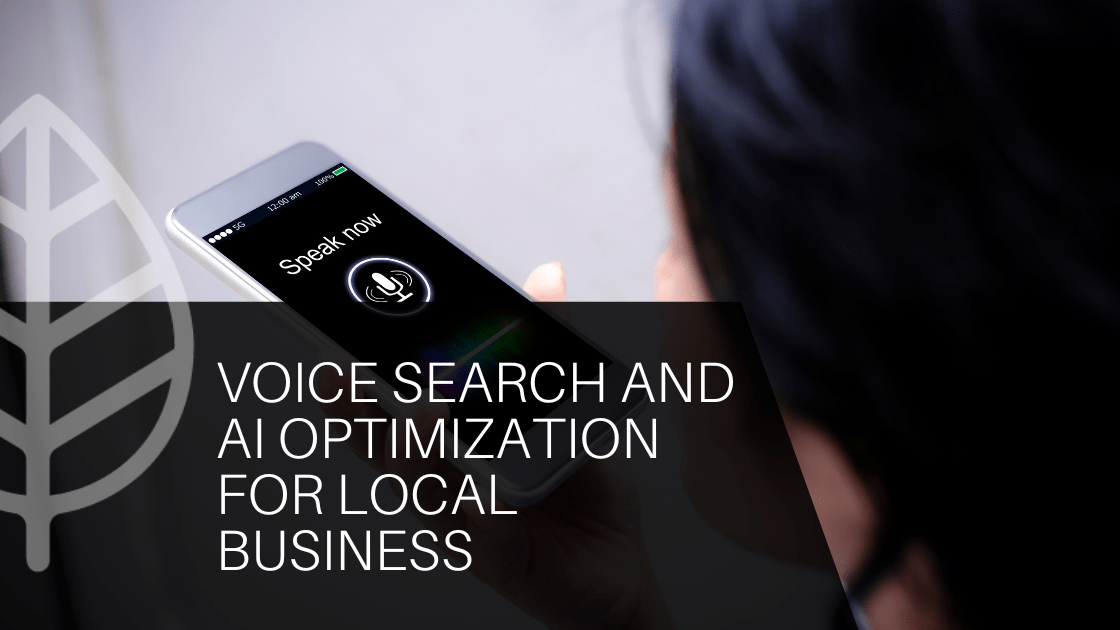
Voice Search And AI Optimization For Local Business

Think about how many times a day you find yourself reaching for your phone to look up something. Whether it be directions, restaurant recommendations, or fact-checking something you saw on Instagram, you probably use your phone for search more than you realize. As of 2026, over half of all internet traffic comes from mobile devices, according to Consumer Affairs. 

This is great news for businesses because they can connect with consumers wherever they go and whatever they are doing. No longer do you need a place with wifi to sit down with your computer if you want to look something up online. Features like data and voice search make it easy for users to search while on the go. 

Half of mobile users in the U.S. use voice search daily, and much of this traffic comes from AI assistants like Siri. 

Optimizing for voice search is becoming increasingly important for getting your business in front of users, especially as search becomes increasingly reliant on AI.


Voice Search SEO Can Connect Local Businesses With High-Intent Consumers

Imagine two users searching for restaurants in their area: one is searching on their laptop at home, and the other is using voice search while driving around town. Which one do you think is likely to commit to going to a restaurant first? Probably the one on the road.

Users often use voice search when they want an immediate, highly relevant answer. These users are high-intent and ready to convert, making them an incredibly valuable group to target.

The same factors that make these users ready to convert are also why a strong voice search SEO strategy is so important. Busy, multitasking users are likely to choose the first relevant answer they receive from their AI assistant. If you are not among the first few suggestions, you are not being considered.

But if you can get in those first few suggestions, you can unlock an audience of consumers ready to convert. 


Voice Search is Changing eCommerce

Voice search is impacting more than businesses with physical stores or local service providers; it is also changing how consumers shop online. 

In 2024, 22% of consumers were using voice search to make direct purchases through their AI assistants. That number has likely increased as AI has increasingly embedded itself in the consumer decision-making process. 

Consumers are using AI assistants to guide their purchasing decisions, largely interacting with them via voice search. Appearing in these search results will become increasingly critical for e-commerce businesses to connect with and attract consumers.


How to Optimize for Voice Search and AI Assistants

In many ways, the old rules of SEO still apply, especially as AI often scrapes top search results for information. Authority, relevance, and trustworthiness are important for appearing in both traditional search results and voice search results. 

For example, if someone does a voice search for a particular service and your business has an average rating of 3 stars out of 5, there is a good chance it will not appear on the first page. 

The main difference between traditional search and voice search lies in how users phrase their queries. Voice search queries tend to be more conversational and more clearly phrased as questions. This aligns with the trend we are seeing in AI searches, where queries are longer, more specific, and more natural-sounding than traditional searches. 

Adapting your SEO strategy for these longer, more conversational queries is critical for keeping up with changing search behavior. 

Working with a marketing company like the Ad Leaf that specializes in AI-friendly SEO strategies can help bring your website out of 2015 and into this new era of AI search. 


It Can Help With A Local Business Website Structure & Content Marketing

When a business has a website and is looking to build a content marketing strategy for voice search SEO, it should imagine being in the customer’s position. What questions might they ask?

When marketing, it is important to consider the consumer journey. At which point in the journey does the consumer see your marketing, and how can we move them further along that journey?

You want your content to guide the consumer toward a purchase decision. If they are using voice search SEO, you need to be the business that can answer all their questions and objections about why they need your products and services.

High-quality, relevant content optimized for voice search can help you, as a local business, be found on the first page of Google.


Appear in Voice Searches With The AD Leaf

The AD Leaf’s SEO and Content Marketing teams stay on top of evolving SEO trends and user search behavior, so that even in a shifting search landscape, your website reaches consumers.


Start ranking in voice searches with The AD Leaf

Creating an Intelligent Marketing Ecosystem: Integrating AI Virtual Assistants for Seamless User Experience

Creating an Intelligent Marketing Ecosystem: Integrating AI Virtual Assistants for Seamless User Experience

In the modern digital landscape, the “funnel” is no longer a linear path; it is an atmosphere. At The AD Leaf Marketing Firm, we describe the pinnacle of modern strategy as an intelligent marketing ecosystem. This is a self-sustaining environment where every digital touchpoint, from social media to your website, works in tandem to nurture a lead. At the heart of this evolution is the strategic integration of AI virtual assistants in marketing.

Gone are the days when a chatbot was a simple, “if-then” script that frustrated users more than it helped. Today, AI virtual assistants in marketing represent a sophisticated layer of artificial intelligence capable of natural language processing (NLP) and predictive behavior. For businesses looking to scale, these assistants are not just “add-ons”; they are the connective tissue that ensures a seamless customer interaction at any hour of the day.


The Shift Toward an Intelligent Marketing Ecosystem

An intelligent marketing ecosystem is defined by its ability to learn and adapt. Traditional marketing is reactive: you run an ad and wait for a click. In contrast, an AI-powered marketing ecosystem is proactive. When a user lands on your site after reading about the benefits of hiring an agency for your marketing, the AI assistant already understands the context of their visit.

By using marketing automation tools, we can map the user’s journey in real time. If the user stops on a service page for more than thirty seconds, the AI assistant can offer a case study or a consultation link. This isn’t just automation; it’s an enhancement of user experience that feels personal rather than programmed.


Enhancing User Experience Through AI

User experience (UX) is the ultimate currency of the web. Google’s latest algorithm updates place heavy emphasis on how users interact with your content. AI virtual assistants in marketing play a pivotal role here by providing immediate gratification.

Consider this: According to a study by Juniper Research, AI-powered chatbots and virtual assistants are projected to drive over $112 billion in retail sales by 2023. This staggering figure highlights that consumers aren’t just “okay” with AI; they are actively using it to make purchasing decisions. When you integrate AI virtual assistants into marketing, you remove the friction that often leads to cart abandonment or bounced sessions.


Seamless Customer Interaction and Voice Search

The rise of AI is intrinsically linked to how we search. As we have noted in our deep dive into voice search SEO for local businesses, more users are “talking” to the internet than ever before. AI virtual assistants in marketing bridge the gap between voice queries and website conversions.

When a user asks their phone, “Who is the best digital agency in Melbourne?” and lands on our site, our internal AI virtual marketing assistants can maintain that conversational tone. This creates a seamless customer interaction that mirrors a human conversation, which is critical for building trust in the high-stakes world of B2B and high-ticket B2C services.


Marketing Automation Tools: The Engine Room

To build a truly intelligent marketing ecosystem, you must look beyond the front-end chat bubble. The real power of AI virtual assistants in marketing lies in their integration with your CRM and marketing automation tools.

Every interaction a user has with an AI assistant provides data. This data should automatically flow into your content strategy. If your assistant reports that 40% of users are asking about “SEO pricing,” you know exactly how to enhance your content marketing strategy to address those specific pain points.


Why The AD Leaf?

At The AD Leaf Marketing Firm, we don’t just implement tools; we engineer results. Creating an intelligent marketing ecosystem requires a deep understanding of how AI virtual assistants in marketing interact with human psychology and search engine algorithms. Our team specializes in moving the needle for our clients by ensuring that every seamless customer interaction is backed by data-driven logic and creative excellence. We provide the “Human Element” that directs the AI, ensuring your brand remains authentic while becoming hyper-efficient.

How to Make Your Photos Pop for Social Media Marketing

Strong visuals drive modern digital success, yet many businesses still struggle with weak content and messaging that fails to connect with their audience. In today’s competitive digital space, brands must prioritize content writing, graphic design, marketing, and social media working together to build clarity and impact. At The AD Leaf Marketing Firm, we help businesses transform inconsistent visuals into powerful storytelling tools that improve targeting and performance.

Why Weak Visual Content Hurts Your Brand

Many businesses rely on inconsistent imagery that does not support their message. This leads to low social media engagement, unclear branding, and missed opportunities. Strong social media photography ensures your audience immediately understands your value, while strategic content writing strengthens that message across platforms. Without alignment, even high-effort campaigns fall flat.

Research from HubSpot shows that content with relevant images gets 94% more views than content without visuals, highlighting how essential strong visuals are for marketing success. This is where intentional visual marketing strategies make a measurable difference.

If your brand is struggling with inconsistent branding or underperforming posts, it’s time to rethink your approach. Strengthening your visual identity starts with improving your social media photography and applying structured photo enhancement tips that align with your audience.

Take the next step in refining your brand presence and improving your digital performance by exploring how integrated strategy improves results:

FRAMING AND COMPOSITION

Social Media MarketingThe “rule of thirds” is a rule of thumb in the composition of visual images such as photography, graphic designs and painting.  It can be applied to any subject to improve the composition and balance of your images to make your design more engaging. The rule of thirds involves mentally dividing up your image using 2 horizontal lines and 2 vertical lines. You then position the important elements in your scene along those lines, or at the points where they intersect.  You want to use the rule of thirds, both horizontally and vertically by placing  your subject in the right or left third of the photo–this stimulates the viewer to spend more time looking at your photo.  The idea is that an off-center composition is more pleasing to the eye and looks more natural than one where the subject is placed right in the middle of the frame. It also encourages you to make creative use of negative space, the empty areas around your subject.

If your photo is of a landscape, avoid putting the horizon line in the middle of the photo because this tends to make the photo feel like it’s split in two.  Instead, place the horizon line along one of the horizontal lines of thirds. Make sure any focal point of the picture is placed at one of the points where the horizontal and vertical lines meet to serve as an “anchor” for the image.

If your picture is of a person, remember that the eyes are where we are naturally drawn to, so put the eyes level with one of the horizontal lines of thirds or at one of the points where the horizontal and vertical lines intersect to make a much more interesting photo and not a “mug shot” (where the subject is centered in the middle of the frame).


Building Stronger Audience Targeting Through Visual Strategy

Effective marketing is not about posting more content; it is about posting the right content to the right audience. Weak content and messaging often come from not understanding audience behavior. When businesses invest in visual marketing strategies, they gain clarity on what resonates and what does not.

Social media photography plays a key role in this process. High-quality images tailored to your target demographic increase recognition and trust. Combined with strong content writing, brands can deliver messaging that feels intentional and consistent. This alignment improves social media engagement and ensures your audience stays connected.

We often see businesses overlook simple photo enhancement tips that dramatically improve results. Adjusting lighting, color balance, framing, and composition can elevate average content into eye-catching images that stop the scroll. When paired with strategic content writing, these visuals become powerful communication tools that drive social media engagement.

At The AD Leaf Marketing Firm, we encourage brands to treat every post as a strategic opportunity. Strong visual marketing strategies ensure your audience understands your value immediately, without confusion or distraction.

Creating High-Quality, Consistent Content That Converts

Consistency is the foundation of strong digital performance. Businesses that prioritize high-quality, consistent content outperform those that post sporadically or without strategy. Consistency builds trust, improves recognition, and strengthens social media engagement over time.

Social media photography should follow a unified style guide that reflects your brand identity. This includes tone, color palette, composition, and message alignment. When combined with content writing, your brand voice becomes recognizable across all platforms.

Using structured photo enhancement tips helps maintain quality standards across all posts. Even small adjustments can turn average visuals into eye-catching images that improve engagement rates. Strong visual marketing strategies ensure that every piece of content serves a purpose, whether it is awareness, engagement, or conversion.

Businesses that integrate these practices also see improved performance in cross-channel efforts. Learn how social media and SEO work together to strengthen visibility:
Social Media and SEO Strategy

To improve results further, brands must focus on social media engagement as a performance indicator, not just a vanity metric. Engagement reflects how well your content resonates with your audience and how effectively your messaging communicates value.

Turning Visuals Into Engagement-Driven Marketing Assets

Every piece of content you publish should support your broader marketing goals. Social media photography is not just about aesthetics; it is about communication. When paired with strong content writing, your visuals can guide users through a clear journey that supports conversion.

Businesses that use intentional visual marketing strategies consistently outperform those that do not. These strategies ensure that eye-catching images are not random but purposeful. Each post should support brand awareness, trust-building, or direct engagement.

Photo enhancement tips also play a critical role in maximizing performance. Simple improvements like sharpening details, adjusting contrast, or optimizing composition can significantly increase social media engagement. Over time, these improvements compound and build a stronger digital presence.

We also recommend evaluating performance regularly to understand what drives engagement. Patterns in social media photography can reveal what your audience prefers, helping you refine future content writing and visual marketing strategies.

Strengthening Messaging With Better Content and Design Alignment

Weak content and messaging often stem from misalignment between design and communication. When graphic design, content writing, and marketing operate separately, the result is confusion for the audience. Strong visual marketing strategies solve this by aligning all creative elements under one direction.

Eye-catching images alone are not enough. They must be supported by messaging that reinforces your brand’s value. This combination increases social media engagement and builds trust with your audience over time.

Applying structured photo enhancement tips ensures that every image supports your message. Meanwhile, consistent social media photography builds recognition across platforms. Together, these elements create a cohesive experience that strengthens your brand identity.

Why The AD Leaf

At The AD Leaf Marketing Firm, we help businesses transform weak content and messaging into powerful, results-driven campaigns. Our approach combines content writing, graphic design, marketing, and social media into one unified strategy that prioritizes clarity, consistency, and performance.

We focus on developing high-quality, consistent content supported by strong visual marketing strategies that elevate your brand presence. Through expert social media photography, advanced photo enhancement tips, and data-driven planning, we create eye-catching images that improve social media engagement and strengthen audience targeting.

If your business is ready to improve its digital presence, now is the time to act.

AI Video Production company, ai video generattion, ai video advertising

AI Video Generation Services for Social Media Content

AI Video Generation Services for Social Media Content: Best AI Video Generators

Businesses often grapple with the challenge of consistently producing high-quality social media content that truly captivates their audience and drives engagement. If you’re struggling to keep up with the demands of various social media platforms, or finding traditional video production methods too time-consuming and expensive, then leveraging AI video generation might be the innovative solution you’ve been searching for. This article will delve into how artificial intelligence is revolutionizing video creation, offering a scalable and efficient way to enhance your social media presence and connect with your target market more effectively.

What is AI Video Generation and How Does It Work?

AI video generation represents a groundbreaking technological advancement that allows users to create compelling video content with minimal human input. It harnesses the power of artificial intelligence to automate various stages of video production, from script generation to final video editing, making high-quality video creation accessible to a broader audience. Understanding this innovative process is crucial for businesses looking to streamline their content creation workflows and maintain a competitive edge in digital marketing.

Understanding AI Video Generation Technology and Generative AI

AI video generation technology fundamentally relies on advanced machine learning algorithms and deep neural networks to interpret and translate user inputs into visual narratives. This sophisticated AI tool can analyze text prompts, integrate various media elements, and even simulate human-like presenters or AI avatars. The core of this technology lies in its ability to understand context and generate coherent, engaging video content that aligns with the user’s initial vision, significantly reducing the time and effort traditionally associated with video production.

How AI Video Generators Create Content

AI video generators typically initiate the content creation process by taking a text prompt or a pre-written video script as their primary input. These powerful AI tools then leverage their extensive databases of visuals, audio, and AI voiceovers to synthesize a complete video clip. They can intelligently select appropriate background music, add text overlays, and even incorporate dynamic transitions, effectively turning text into a visually rich and engaging video in minutes, thereby streamlining the entire video creation workflow for marketers.

Key Features of AI Video Generators

Modern AI video generators boast a diverse array of features designed to enhance the video creation experience and produce high-quality output. Many platforms also offer caption generators, sophisticated background music options, and seamless integration for generating videos for social media platforms like TikTok, YouTube Shorts, and LinkedIn, making them invaluable for content creators and marketers alike.

Category Features
Core Functionalities Text-to-video capabilities, vast library of templates, customizable AI avatars, robust video editing tools
Additional Offerings Caption generators, sophisticated background music options, social media integration

Why Use an AI Video Generator for Social Media?

The imperative to consistently produce engaging social media content often places immense pressure on marketers and content creators. An AI video generator provides a strategic advantage by significantly accelerating the video creation process, allowing for greater volume and variety of content without compromising quality or draining resources. This efficiency is critical for maintaining an active and influential presence across diverse social media platforms, ultimately driving better engagement and marketing results.

Benefits of AI-Generated Videos for Social Media Marketing

Utilizing AI-generated videos for social media marketing offers numerous benefits, primarily centered around efficiency and scalability. Businesses can quickly generate video ads, reels, and other social media video content, drastically reducing the time and cost associated with traditional video production. This allows marketers to publish more frequently, experiment with different styles, and personalize content for various social media platforms, leading to improved audience engagement and stronger marketing campaigns across the board.

Comparing AI Video Generators with Traditional Video Production

The contrast between AI video generators and traditional video production methods is stark, particularly concerning speed, cost, and accessibility. Traditional video creation demands significant investment in equipment, personnel, and time for filming, editing, and post-production. In contrast, an AI video maker can generate video in minutes from a simple text prompt, requiring no camera crew or extensive video editing expertise, making high-quality video creation accessible to even small businesses and individual content creators.

Best Practices for Using AI Video on Social Media Platforms

To maximize the impact of AI video on social media platforms, it is essential to adhere to best practices that enhance engagement and deliver clear messages. Focus on creating concise, high-quality video content tailored to each platform’s unique audience and format, whether it’s a short TikTok or a professional LinkedIn video. Incorporate compelling text overlays, relevant background music, and clear calls to action, while ensuring your AI-generated videos maintain a consistent brand voice and visual identity to resonate effectively with your target audience.

How to Choose the Best AI Video Generation Services for Your Business Needs

Criteria for Selecting an AI Video Maker

When selecting an AI video maker, several critical criteria should guide your decision to ensure you choose the best AI video generator that aligns with your specific business needs. Consider the following aspects:

Feature Category Key Considerations
Core Generation Capabilities Text-to-video capabilities, diversity and quality of AI avatars, ease of generating social media video content.
Editing & Customization Range of video editing tools, customizable templates, support for various video formats (e.g., TikTok, YouTube Shorts).
Audio Elements High-quality AI voiceovers, background music options.

Top AI Video Generators for Social Media Content

For businesses focused on creating engaging social media content, several AI video generators stand out. These AI tools allow marketers to generate video content rapidly from a simple text prompt, making it easy to produce reels, video ads, and other short-form videos for social media marketing across various channels.

Among the best AI video generators frequently cited are:

Platform Key Features
HeyGen User-friendly interface, extensive template library, advanced features for dynamic social media videos
InVideo AI User-friendly interface, extensive template library, advanced features for dynamic social media videos

Evaluating Video Editing Tools and Features

Beyond basic video generation, the strength of an AI video generator often lies in its comprehensive video editing tools and features. Look for platforms that offer precise control over text overlays, seamless transitions, and the ability to fine-tune AI-generated video clips. A robust AI video editor should also include a caption generator, options for customizing AI avatars, and the flexibility to adjust background music and pacing to ensure your social media video content is polished and professional, ready for prime time on any social media platform.

Why You Should Work with an AI Video Production Agency like The AD Leaf Marketing Firm?

AI Video Generation Services by The AD Leaf

While AI video tools offer incredible capabilities, partnering with an expert AI video production agency like The AD Leaf Marketing Firm can elevate your AI video generation strategy. The AD Leaf specializes in leveraging the best AI video generators to create engaging social media video content that aligns perfectly with your brand’s objectives. Our AI-powered services ensure high-quality video production, from developing compelling video scripts and text prompts to refining AI-generated videos for maximum impact across all social media platforms, including LinkedIn and TikTok.

AI Video Generation Best Practices

To truly harness the power of AI video generation, it’s crucial to implement best practices that optimize your video content for engagement. This includes crafting concise and compelling text prompts, selecting appropriate AI avatars and templates, and utilizing the full suite of video editing tools to add professional touches. Ensuring your AI-generated videos feature clear calls to action, relevant text overlays, and suitable background music will significantly enhance their effectiveness and help you achieve your social media marketing goals, creating truly captivating reels and video ads.

Step-by-Step Guide to Generating Videos with AI Tools

How to Create Engaging Videos Using AI Video Generators

Creating engaging videos with AI video generators begins with a clear vision and a well-crafted text prompt. Start by defining your target audience and the message you want to convey, then input your video script or prompt into the AI tool. Experiment with different templates and AI avatars to find the best fit for your brand’s aesthetic. The goal is to generate video content that is not only visually appealing but also effectively communicates your message, making it ideal for social media platforms and driving user interaction.

Editing Your AI-Generated Videos for Maximum Impact

After generating your initial video clip, the next crucial step is editing your AI-generated videos for maximum impact. Utilize the platform’s video editing tools to refine transitions, adjust text overlays, and synchronize background music. Pay close attention to pacing and ensure the captions are accurate and engaging. A well-edited AI video will captivate your audience on social media platforms like YouTube Shorts and LinkedIn, turning text into a polished and professional piece of content that resonates with viewers and enhances your brand’s presence.

Using Templates and Prompts Effectively

Effectively using templates and prompts is key to maximizing the efficiency and quality of your AI video generation efforts. Start by exploring the range of templates available in your chosen AI video generator, selecting one that aligns with your video content goals. Then, craft clear, descriptive text prompts that guide the AI in generating the desired visuals and narrative. Don’t be afraid to iterate and refine your prompts, as small adjustments can lead to significant improvements in the output, helping you create engaging and high-quality social media video content.

Key Takeaways on AI Video Generation Services

Summarizing the Benefits of AI Video for Social Media

AI video generation offers unparalleled benefits for social media, primarily through its ability to quickly and cost-effectively produce high-quality video content. This technology enables marketers and content creators to generate videos for social media platforms such as TikTok, YouTube Shorts, and LinkedIn with remarkable efficiency. By leveraging AI tools, businesses can create engaging video ads, reels, and other social media video content at scale, significantly enhancing their online presence and driving better audience interaction without the traditional burdens of video production.

Importance of Choosing the Right AI Video Generator

Selecting the best AI video generator is crucial for maximizing your social media marketing efforts. The right AI video maker should offer a comprehensive suite of features, including advanced text-to-video capabilities, a diverse range of AI avatars, and robust video editing tools. Evaluating factors like customizable templates, high-quality AI voiceovers, and the ease of generating videos for social media will ensure you choose an AI tool that seamlessly integrates into your content creation workflow and delivers engaging, professional-grade video content.

Next Steps for Implementing AI Video Services

To effectively implement AI video services, begin by identifying your specific content needs and target audience for social media. Explore various AI video generators like HeyGen and InVideo AI to find the best fit for your brand’s aesthetic and budget. Experiment with different text prompts and templates to generate video content, then utilize the available video editing tools to refine and optimize your AI-generated videos. For comprehensive support, consider partnering with an expert agency like The AD Leaf Marketing Firm to streamline your AI video generation strategy.

Frequently Asked Questions | The AD Leaf Marketing Firm

What is the best AI video generator currently available?

While the “best” AI video generator can vary based on specific needs, HeyGen and InVideo AI are consistently recognized as top contenders for creating social media video content. These AI tools offer powerful text-to-video capabilities, a wide array of customizable AI avatars, and intuitive video editing tools that allow users to generate high-quality video in minutes from a simple text prompt. Their features make them ideal for marketers and content creators looking to produce engaging reels, video ads, and other videos for social media platforms efficiently.

Can AI video generators produce high-quality videos?

Yes, modern AI video generators are highly capable of producing high-quality videos that are suitable for professional social media marketing. With advancements in artificial intelligence and machine learning, these AI tools can generate video content with impressive visual fidelity, realistic AI voiceovers, and seamless transitions. Many platforms offer extensive libraries of templates, customizable AI avatars, and robust video editing features that allow content creators to fine-tune their AI-generated videos, ensuring a polished and engaging output that competes with traditionally produced video content.

How do I integrate AI-generated videos into my marketing strategy?

Integrating AI-generated videos into your marketing strategy involves several key steps. First, identify where video content can enhance your existing campaigns, whether for product launches, educational content, or engaging social media posts. Utilize an AI video generator to create short, captivating video clips tailored for platforms like TikTok, YouTube Shorts, and LinkedIn. Focus on compelling text prompts and then use the video editing tools to add branded elements, text overlays, and clear calls to action, ensuring your AI-powered videos align with your overall marketing objectives.

Are there any limitations to using AI video tools?

While AI video tools offer remarkable advantages in video creation, they do have some limitations. Currently, the level of nuanced emotional expression and complex storytelling may still require human artistic direction, although AI avatars are becoming increasingly sophisticated. Customization options, while extensive, might not always match the limitless possibilities of traditional video production. Furthermore, while AI can generate video quickly, the initial learning curve to effectively use advanced video editing tools and craft the perfect text prompt can take some time for content creators to master for optimal social media video content.

How can I optimize my videos for different social media platforms?

Optimizing your AI-generated videos for different social media platforms involves tailoring content to each platform’s unique audience and technical specifications. For TikTok and YouTube Shorts, focus on short, dynamic, vertical video clips with trending background music and engaging text overlays. For LinkedIn, aim for more professional, informative video content, possibly featuring an AI avatar presenting key insights. Always ensure your videos for social media have clear captions for accessibility and utilize the platform’s native features to maximize reach and engagement, thereby enhancing your social media marketing efforts.

What support does The AD Leaf Marketing Firm offer for AI video generation?

The AD Leaf Marketing Firm provides comprehensive support for AI video generation, helping businesses leverage the best AI video generators to create compelling social media video content. Our services include strategic guidance on selecting the right AI tool, assistance in crafting effective text prompts and video scripts, and expert use of video editing tools to refine AI-generated videos. We specialize in producing high-quality video ads, reels, and other social media video content that aligns with your brand’s goals, ensuring your AI-powered video marketing drives measurable results across all social media platforms.

losing traffic to ai search

Why Your Business Is Losing Traffic to AI Search

Why Your Business Is Losing Traffic to AI Search?

Are you a business owner noticing a significant decline in your website traffic and struggling to understand why? Understanding online search and how it functions, particularly the rise of AI search, is likely playing a crucial role. Many businesses are experiencing a traffic drop, seeing their organic traffic drop, and are facing several challenges, including losing traffic to AI search and searching for solutions to this modern marketing challenge. This article will help you understand the dynamics of AI search and how to adapt to ensure your business maintains its online visibility and continues to attract valuable customers.

Key Takeaways: Why Businesses Are Losing Traffic to AI Search

  1. AI search changes user intent and query behavior. AI-driven search interfaces synthesize answers and reduce clicks to traditional web pages, meaning businesses that rely solely on organic link clicks see fewer visits. To adapt, focus on content designed to satisfy intent at the answer level—concise, authoritative snippets, structured data, and clear on-page signals that AI models can surface as source references.
  2. Content format and structure matter more than raw SEO volume. AI systems prefer clear, well-structured answers: FAQs, step-by-step instructions, tables, schema markup, and summarized takeaways. Long-form content still has value but must include easily extractable sections and authoritative citations to be chosen as a source for AI-generated responses.
  3. Authority, relevance, and freshness are stronger ranking signals. AI rankers prioritize trusted sources and recent information for factual queries. Businesses must invest in demonstrating expertise (author bios, citations, original research), maintaining up-to-date content, and building topical authority through internal linking and external endorsements to remain selectable by AI search engines.
  4. Technical SEO and data strategies become differentiators. Sites that expose machine-readable data, structured data, APIs, open knowledge graph contributions, are more likely to be referenced by AI. Improving site performance, crawlability, and content discoverability (sitemaps, canonicalization, consistent metadata) increases chances of being cited rather than bypassed.

If your business is losing traffic to AI search, you don’t have to navigate the shift alone. The AD Leaf specializes in modern SEO, content strategy optimized for AI-driven discovery, and technical data implementation to regain visibility and convert the traffic that remains. Contact The AD Leaf to audit your content strategy, implement structured data and answer-focused content, and build a roadmap to reclaim traffic in the era of AI search.

Understanding AI Search and Its Impact on Website Traffic

The advent of AI-powered search has fundamentally reshaped how users interact with search engines, leading to significant changes in website traffic patterns. Businesses are witnessing a direct impact on their organic traffic as AI systems become more sophisticated in providing immediate answers. Understanding this shift is paramount for maintaining digital visibility.

What Is AI Search and How Does It Differ from Traditional Search?

AI search represents a significant evolution from traditional search engines by leveraging advanced AI models to interpret user queries and generate comprehensive AI responses directly within the search results. Unlike traditional search, which primarily provides a list of links for users to click, AI search aims to answer questions directly. This often happens through:

  • AI overviews
  • AI summaries

This reduces the need to click through to your website, meaning users are getting their answers at the top of search results without ever visiting a website, leading to a traffic decline for many businesses.

Why Is Your Website Traffic Dropping Due to AI Search?

Your website traffic dropping can often be attributed to the way AI search results are presented. When AI provides direct answers, particularly through Google AI Overviews, users may not feel the need to click to any website, thereby reducing your organic search traffic. This means that even if your content is ranking well, users are getting their information from the AI answers, causing a significant traffic drop and impacting your overall search visibility. The shift in search behavior means that impressions no longer guarantee clicks.

How Can You Adapt to Changes in Search Behavior?

To adapt to these profound changes in search behavior and combat losing traffic, businesses must evolve their digital marketing strategies. The focus should shift from merely achieving high rankings to optimizing for AI visibility and aiming to trigger AI overviews. Understanding what kind of content AI systems favor and how to structure your information for AI-generated responses is crucial for maintaining and even increasing your organic traffic in this new search landscape. This new era demands a proactive approach to SEO.

How to Navigate Google Algorithm Updates

Navigating Google algorithm updates in the era of AI-driven search requires a nuanced understanding of their evolving priorities. With Google continually refining its AI models, businesses must stay abreast of changes to maintain search visibility and mitigate organic traffic declines. Adapting your SEO strategy is no longer optional but essential.

Google Prioritizing Zero-Click Searches

Google’s increasing prioritization of zero-click searches, particularly through AI Overviews, means users are often getting complete answers without ever leaving the search engine results page. This paradigm shift directly impacts your website traffic, as users no longer need to click through to your website for information. Businesses must understand that while their content might still be relevant, the impression doesn’t always translate into a click, leading to a noticeable traffic drop and a reduction in referral traffic.

How to Rank in Google AI Overviews

To rank in Google AI Overviews and secure AI visibility, content must be structured to directly answer user queries comprehensively and concisely. This involves optimizing for answer engine optimization, focusing on clear, authoritative, and well-organized information that AI systems can easily parse and present as AI summaries. Providing definitive answers and demonstrating expertise on a subject makes it harder for AI to bypass your content, increasing the likelihood that your site will be cited or featured within the AI overview itself.

Brand Recognition Over Keyword Optimization

Brand recognition is becoming increasingly vital, sometimes even outweighing traditional keyword optimization. As AI search provides more direct answers, users may be more inclined to seek out trusted brands for further information or services, even if they don’t click on the initial AI response. Building a strong brand identity and cultivating a reputation as an authority in your niche can significantly enhance your search visibility and drive remaining traffic, regardless of how AI changes search.

SEO Strategies for Maintaining Visibility in an AI-Driven World

How to Optimize Your Website for AI Search?

To optimize your website for AI search and enhance your online visibility, it’s crucial to focus on providing clear, comprehensive, and authoritative content that AI systems can easily understand and process. This involves structuring your information with direct answers to common queries, using semantic SEO techniques, and ensuring your content addresses the user’s intent thoroughly. By making your website a definitive source of information, you increase the likelihood of your content being featured in AI overviews and AI summaries, thus maintaining your search visibility even when users do not click through to your website.

What Role Do Keywords Play in AI Search Optimization?

While the role of keywords in traditional search optimization is shifting, they still play a significant role in AI search optimization, albeit with a new emphasis on natural language and semantic relevance. Instead of merely stuffing keywords, businesses should focus on incorporating long-tail keywords and conversational phrases that mirror how users pose questions to AI-powered search engines. This approach helps AI systems better understand the context and intent behind a user’s query, improving your chances of ranking for relevant AI responses and securing your position in the evolving search landscape.

How Can You Enhance Your Organic Traffic Amidst AI Competition?

Enhancing your organic traffic amidst intense AI competition requires a multi-faceted approach that prioritizes user experience and content depth. Focus on creating unique, valuable content that goes beyond what AI overviews can provide, encouraging users to click through to your website for more detailed insights. Building authority and trust in your niche can make it harder for AI to completely bypass your content, as users may actively seek out your brand. Additionally, monitoring your organic search performance through tools like Google Search Console can help you identify opportunities and adapt your strategy.

Addressing the Traffic Decline: Actionable Steps

How to Analyze Your Traffic Drops Effectively?

When experiencing a traffic drop, effectively analyzing the decline is the first crucial step to adapting your digital marketing strategy. Utilize analytics platforms to pinpoint specific pages or content areas that have seen a reduction in website traffic, and compare these drops with major Google algorithm updates or the increased prevalence of AI overviews in search results. Understanding the nature of the traffic declines—whether it’s an overall search reduction or a shift in organic search traffic—will help you diagnose the problem accurately and formulate targeted solutions to improve your visibility.

Steps to Improve Your Website’s AI Visibility

To improve your website’s AI visibility and combat losing traffic, implement several key steps. These include:

  1. Re-evaluating your content to ensure it provides comprehensive, answer-first information that can easily be picked up by AI systems for AI summaries and AI responses.
  2. Optimizing for answer engine optimization by structuring your content with clear headings and concise answers to common queries, making it easier for AI to trigger AI overviews from your site.
  3. Focusing on building domain authority, as AI often prioritizes credible and authoritative sources for its AI-generated content.

How to Leverage LinkedIn for Increased Website Traffic?

Leveraging LinkedIn for increased website traffic involves strategic content sharing and engagement within the professional network. Share snippets of your website content, especially those designed to trigger AI overviews, and link back to the full articles on your site. Participate in relevant industry discussions and groups, positioning your brand as an expert. This not only drives referral traffic directly from LinkedIn but also enhances your brand recognition, which can indirectly improve your overall search visibility as AI is changing search, making it harder for AI to completely overshadow trusted brand content.

The Future of Search: Preparing for Ongoing Changes

What Trends Should You Watch in AI Search Technology?

To prepare for the future of search, businesses must closely watch key trends in AI search technology, particularly the continued evolution of AI models and their impact on search behavior. Anticipate further integration of AI overviews and AI summaries directly into search results, reducing the need for users to click through to your website. Pay attention to advancements in multimodal search, where AI-powered search engines process not just text but also images, audio, and video, broadening the scope of optimization. Staying informed about these changes is vital for maintaining organic search traffic and overall search rankings.

How to Future-Proof Your SEO Strategy Against Traffic Declines?

Future-proofing your SEO strategy against potential traffic declines requires a proactive and adaptable approach. Focus on creating evergreen content that consistently provides value, making it harder for AI to completely supplant your information. Diversify your digital marketing efforts beyond just organic search, exploring channels like email marketing, social media, and paid search to build a more resilient online presence. Continuously monitor your website traffic and search rankings, using insights from Google Search Console to adapt your strategy as AI is changing search and the AI search market continues to evolve. The AD Leaf Marketing Firm can help you adapt and thrive in this evolving landscape.

How The AD Leaf Marketing Firm Can Help?

The AD Leaf Marketing Firm is your expert partner in navigating the complexities of AI-driven search and ensuring your business maintains strong online visibility. We specialize in developing scalable, results-driven marketing strategies that help businesses adapt to Google algorithm updates and the rise of AI overviews. From optimizing your content to trigger AI responses and improving your AI visibility, to diversifying your traffic sources and understanding the nuances of the AI search market, our team provides comprehensive solutions. Partner with The AD Leaf to safeguard your organic traffic, enhance your search rankings, and thrive in the future of search, ensuring you don’t keep losing traffic to AI search.

Key Takeaways

Summarizing the Impact of AI Search on Website Traffic

The rise of AI search, particularly AI overviews, has fundamentally altered how users interact with search results, leading to a significant shift in website traffic patterns. Businesses are experiencing a noticeable traffic drop as AI systems provide direct answers, reducing the need for users to click through to websites. This means that while content might still be ranking, the conversion from impression to click has diminished, demanding a re-evaluation of traditional SEO strategies to maintain online visibility and adapt to this new digital marketing landscape.

Highlighting Actionable Steps for Businesses

To combat losing traffic to AI search, businesses must implement actionable steps focused on AI visibility and answer engine optimization. This involves structuring content to directly answer user queries, making it easier for AI to generate AI summaries and AI responses from your site. Diversifying traffic sources beyond organic search, leveraging platforms like LinkedIn, and proactively adapting to Google algorithm updates are crucial for maintaining website traffic and ensuring your business remains competitive in an AI-driven search market.

Reinforcing the Importance of SEO Adaptation

SEO adaptation is no longer an option but a necessity in the era of AI-powered search. Businesses must move beyond traditional keyword optimization and embrace strategies that optimize for AI systems, focusing on comprehensive, authoritative content that can trigger AI overviews. Continuously monitoring website traffic and search rankings through tools like Google Search Console allows for ongoing refinement of digital marketing efforts, ensuring your business stays ahead of the curve as AI is changing search, safeguarding your organic traffic and overall search visibility.

For businesses seeking expert guidance in navigating the complexities of AI search and optimizing their digital strategy, The AD Leaf Marketing Firm offers comprehensive solutions. Our expertise helps you understand Google AI Overviews, improve your AI visibility, and develop resilient SEO strategies that drive results and ensure your business thrives amidst these ongoing changes.

Frequently Asked Questions | The AD Leaf Marketing Firm

What Are Common Reasons for Traffic Drops Due to AI Search?

Common reasons for a traffic drop due to AI search primarily stem from AI overviews and AI summaries providing direct answers within the search results, reducing the need for users to click through to your website. When AI systems provide immediate AI responses, users receive the information at the top of search results, leading to a decrease in organic traffic. This shift in search behavior means that your content may still be ranking, but the lack of clicks results in website traffic dropping significantly, impacting your overall search visibility.

How Can I Check if AI Search Is Affecting My Website?

You can check if AI search is affecting your website by closely monitoring your organic traffic in Google Search Console and other analytics platforms. Look for sudden traffic declines that coincide with major Google algorithm updates or the increased prevalence of AI overviews for your target keywords. Analyze whether your top-ranking pages are still receiving clicks or if users are getting their answers directly from AI summaries, indicating that AI search is leading to a traffic drop and impacting your search rankings.

What Tools Can Help Me Analyze My Website Traffic?

Several AI tools can help you analyze your website traffic and understand the impact of AI search. Google Analytics provides comprehensive data on user behavior and traffic sources, while Google Search Console offers insights into your search visibility, keyword performance, and AI-driven search trends. Other third-party SEO tools can also help you identify which of your content is being featured in AI overviews or AI summaries, allowing you to adapt your digital marketing strategy and optimize for AI responses effectively.

Can I Still Rely on Traditional SEO Techniques?

While traditional SEO techniques still hold some value, relying solely on them in the era of AI-driven search is increasingly insufficient for maintaining robust website traffic. Keyword optimization remains important, but the focus has shifted towards semantic SEO, answer engine optimization, and creating authoritative content that AI systems can easily interpret for AI summaries. To truly adapt and prevent losing traffic, businesses must evolve their strategies to prioritize AI visibility and understand how AI is changing search, rather than exclusively depending on older methods.

How Often Should I Update My SEO Strategy for AI Search?

Given the rapid evolution of AI search and frequent Google algorithm updates, you should aim to review and update your SEO strategy for AI search at least quarterly, if not more frequently. The AI search market is constantly developing, with new AI models and AI-powered search features emerging regularly, impacting search behavior. Regularly monitoring your organic traffic, search rankings, and how AI overviews are affecting your niche allows you to adapt proactively, ensuring your digital marketing efforts remain effective and your website maintains strong visibility in 2025 and beyond.

What Makes The AD Leaf Marketing Firm a Good Partner for SEO?

The AD Leaf Marketing Firm is an excellent partner for SEO because we specialize in developing scalable, results-driven marketing strategies tailored to the modern search landscape, including the complexities of AI-driven search. We help businesses understand the nuances of Google AI Overviews, optimize for AI visibility, and adapt to ongoing Google algorithm updates to prevent losing traffic. Our expertise in answer engine optimization, leveraging AI tools, and diversifying digital marketing efforts ensures your business maintains robust organic traffic and strong search rankings, making it harder for AI to completely bypass your content.