Anthropic Launches Claude Design, Claude Opus 4.7, OpenAI

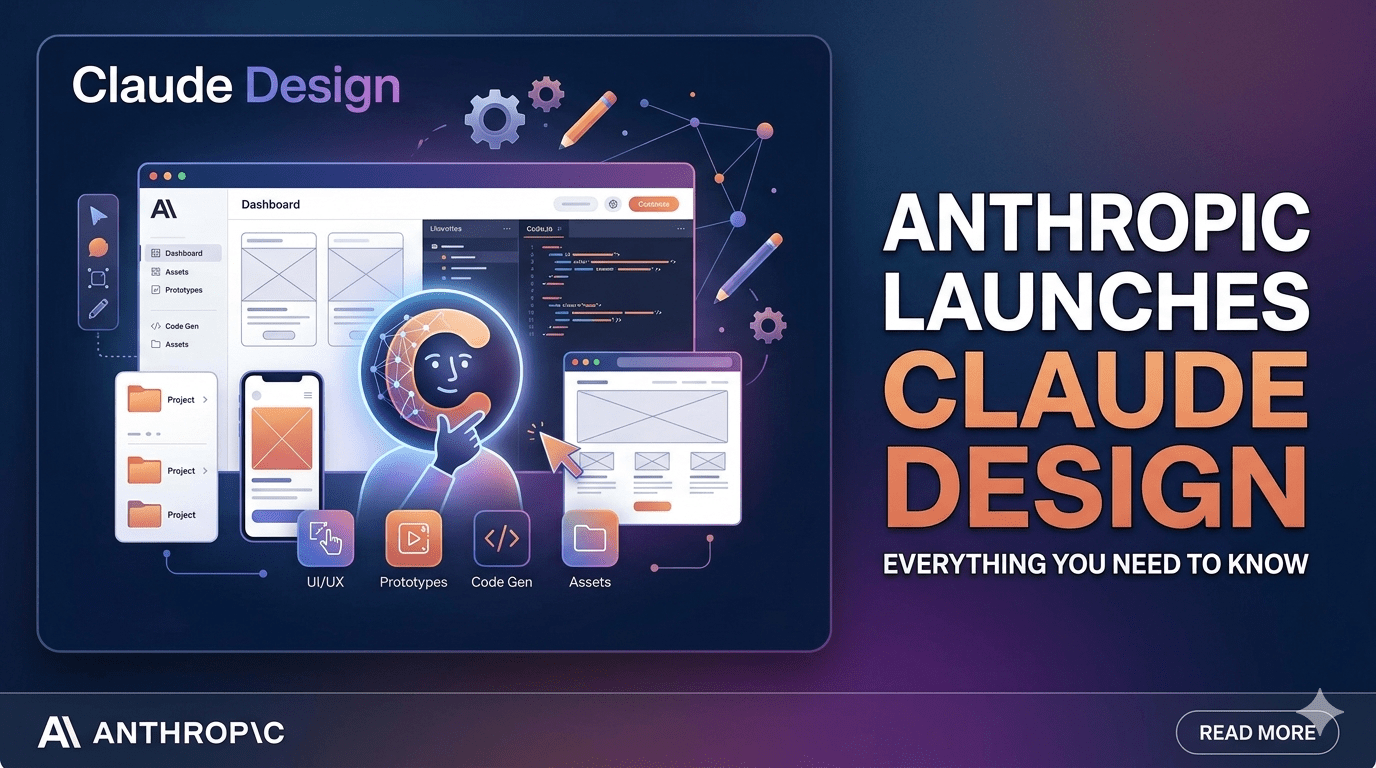
Anthropic Launches Claude Design: Everything You Need to Know

Anthropic Launches Claude Design: Everything You Need to Know

Are you a business owner grappling with inefficient design workflows and struggling to keep pace with rapid product development cycles? The constant need for high-quality visual assets and seamless developer handoffs can be a significant bottleneck, impacting your marketing efforts and overall business growth. This article dicusses Anthropic’s new product, Claude Design, offering a comprehensive guide to understanding its capabilities and how it can revolutionize your design process, providing the solution you’ve been seeking to streamline operations and enhance your creative output.

What Is Anthropic’s Claude Design and Why Is It Important to Design?

Anthropic just launched Claude Design, a groundbreaking artificial intelligence-powered design tool that promises to transform how businesses approach their visual work. Understanding what Claude Design offers and its significance for the design process is crucial for any enterprise looking to gain a competitive edge in today’s fast-paced digital landscape. This new product is set to make design more accessible, efficient, and integrated than ever before, marking a pivotal moment in AI-driven creativity.

Overview of Claude Design

Claude Design, an innovative AI design tool from Anthropic Labs, empowers users of all design backgrounds to create polished visual work with unprecedented ease. This powerful tool acts as a collaborative partner, enabling product managers, marketers, and designers to bring their visions to life through intuitive interactions and intelligent automation, making complex design tasks manageable for everyone on the team.

Feature Detail
Power Source Claude Opus 4.7
Capabilities Understands complex design instructions and generates sophisticated outputs

Key Features of Claude Design

The core of Claude Design’s appeal lies in its robust set of features. It includes a sophisticated web capture tool that can analyze existing websites or PDFs to understand design patterns. Users can provide a text prompt to ask Claude to create various design outputs, which can then be exported in multiple formats:

Design Output Export Formats
Mockups, One-pagers, or Entire Design Systems Standalone HTML files, PPTs, or PDFs

Furthermore, Claude Design is engineered to build integrations with Claude Code, facilitating a seamless handoff from design to implementation, making the entire product development lifecycle more fluid and efficient.

How Claude Design Differentiates From Other Tools

While other AI tools like Canva and OpenAI offer design assistance, Claude Design carves out a unique niche. It focuses on creating comprehensive design systems through its deep integration with Anthropic’s advanced AI models. Unlike tools that primarily offer templates or isolated graphic elements, Claude Design can intelligently build a design system based on a team’s design guidelines, ensuring consistency across all visual assets. Its ability to pass to Claude Code for implementation further distinguishes it, offering an end-to-end solution. Below is a comparison of Claude Design with competitors:

Feature Claude Design Competitors (e.g., Figma, Adobe)
Core Functionality Builds design systems based on guidelines Primarily offers templates or isolated graphic elements
AI Integration Deep integration with Anthropic’s AI models for intelligent design system creation AI-driven features may be present but not for end-to-end design and development workflows
Workflow Integration End-to-end solution, passes to Claude Code for implementation Does not provide the same level of integrated design and development workflows


How to Get Started with Claude Design

Embarking on your journey with Claude Design is straightforward, even if you are new to AI design tools. Anthropic has made Claude Design accessible, ensuring that users can quickly set up their accounts, familiarize themselves with the user interface, and begin creating prototypes without a steep learning curve. The following steps will guide you through the initial process, enabling you to harness the power of this new product for your design needs, from account creation to your first successful project.

Setting Up Your Claude Design Account

To begin using Claude Design, you first need to set up an account, which is currently available as a research preview for Claude Pro and enterprise subscribers. This involves navigating to the Anthropic website and following the registration prompts, which typically require an email address and some basic information to create your user profile. Once your account is active, you will gain access to the Claude Design platform, where you can start exploring its capabilities and integrating it into your existing design workflows with ease and efficiency.

Exploring the User Interface: Figma vs. Claude Design

Upon logging in, you’ll find that the Claude Design user interface is intuitively designed, though it might differ from traditional design tools like Figma or Adobe products. While Figma focuses on collaborative vector graphics editing, Claude Design emphasizes AI-driven generation and system building through text prompts. Users can ask Claude to generate designs, refine existing ones, and manage typography and visual components, moving beyond manual manipulation towards an AI-assisted creative process that redefines interaction with design software. This distinction is vital for understanding its operational philosophy.

Creating Your First Prototype Using Claude Design

Creating your first prototype with Claude Design is an exciting step into AI-powered design. You can start by providing a text prompt describing your desired mockup or one-pager, perhaps specifying a layout, color scheme, and key elements. Claude Design will then leverage its intelligence, powered by Claude Opus 4.7, to generate an initial design, which you can then refine by giving further instructions. This iterative process allows you to collaborate with Claude to create polished visual work, ultimately exporting your prototype as standalone HTML or PDF, ready for review and implementation, bridging the gap between concept and tangible output.

Integrating Claude Code for Enhanced Workflow

What Is Claude Code and What Are the Benefits of Claude Opus 4.7?

Claude Code is Anthropic’s innovative AI coding assistant, designed to seamlessly integrate with Claude Design to transform creative visions into functional code. Powered by the advanced Claude Opus 4.7, Claude Code offers significant benefits by generating clean, efficient code from design mockups, ensuring that the transition from a visual prototype to a live product is smooth and accurate. This integration accelerates development cycles, reduces manual coding efforts, and enhances collaboration between designers and developers, ultimately streamlining the entire product development workflow and allowing teams to build integrations more efficiently.

How to Handoff Your Designs to Claude Code

Handoffs from Claude Design to Claude Code are designed to be effortless, leveraging the deep integration between these Anthropic tools. Once you have created and refined your design in Claude Design, you can simply utilize the “handoff to Claude Code” functionality within the platform. This allows Claude Code to interpret the design system, layouts, and components, generating a corresponding codebase automatically. This streamlined process eliminates much of the traditional manual translation of design specifications into code, ensuring consistency and drastically speeding up development, moving seamlessly from a visual concept to a working prototype.

Best Practices for Using Claude Code with Claude Design

To maximize the efficiency and effectiveness of using Claude Code with Claude Design, several best practices should be followed. Ensure your Claude Design projects are well-structured with clear design systems and consistent typography. When providing a text prompt for Claude Design, be as specific as possible, detailing functional requirements alongside visual elements. Regularly review the generated codebase and design files from Claude Code to ensure they align with your project’s technical specifications and refine as needed. This collaborative approach with Claude will ensure high-quality outputs and a truly integrated design-to-development pipeline, creating polished visual work.

Comparing Claude Design to Other Design Tools

Claude Design vs. Figma: A Feature Comparison

While Figma excels as a collaborative vector graphics editor and prototyping tool, Claude Design distinguishes itself with its AI-first approach. Claude Design, powered by Claude Opus 4.7, can generate entire design systems from a text prompt, whereas Figma requires manual creation of components and styles. Figma’s strength lies in real-time team collaboration on design files, while Claude Design’s unique selling proposition is its ability to directly build integrations with Claude Code, automating the transition from visual design to a functional codebase. Both tools offer powerful features, but Claude Design offers an integrated AI solution.

Claude Design vs. Canva: Which Is Right for You?

Choosing between Claude Design and Canva depends heavily on your specific needs and design background. Canva is an intuitive, template-based graphic design tool ideal for quick, simple visual work, such as social media graphics and presentations, requiring minimal design expertise. Claude Design, as a new product from Anthropic, is built for more complex design challenges, capable of generating comprehensive mockups, one-pagers, and entire design systems through an intelligent text prompt. For businesses seeking advanced AI assistance to streamline product design and development, Claude Design offers a more robust and integrated solution than Canva.

Advantages of Using Claude Design Over Adobe Products

Claude Design presents significant advantages over traditional Adobe products like Photoshop and Illustrator, particularly in terms of automation and AI integration. While Adobe tools offer unparalleled granular control for professional designers, they often involve manual, labor-intensive processes. Claude Design, launched by Anthropic and powered by Claude Opus 4.7, automates many design tasks, allowing users to ask Claude to generate complex designs from simple text prompts and then pass to Claude Code for implementation. This end-to-end AI-driven workflow significantly reduces time-to-market and allows product managers to create polished visual work with unprecedented speed and efficiency.

Key Takeaways

Summary of Claude Design Features

Claude Design, a new product from Anthropic, redefines the design process with its AI-powered capabilities. Key features include a web capture tool for analyzing existing designs, the ability to generate entire design systems, mockups, and one-pagers from a text prompt, and seamless integration with Claude Code for development handoffs. It is powered by Claude Opus 4.7, ensuring intelligent and sophisticated outputs, and allows users to export designs as standalone HTML files, PPTs, or PDFs, making it an incredibly versatile and powerful design tool for various applications.

Benefits of Using Claude Design for Businesses

For businesses, Claude Design offers a multitude of benefits, primarily by streamlining the entire design-to-development pipeline. It significantly accelerates product development cycles, reduces the need for extensive design expertise within a team, and ensures design consistency across all visual assets by building a design system from the ground up. The ability to collaborate with Claude to create and refine designs, coupled with the efficient handoff to Claude Code, enables faster iteration and deployment, ultimately saving time and resources while enhancing the quality of your company’s visual work.

Why Choose The AD Leaf Marketing Firm for Implementation

Implementing a sophisticated AI design tool like Claude Design into your existing workflows requires expert guidance to maximize its potential. The AD Leaf Marketing Firm specializes in integrating cutting-edge AI marketing and advertising solutions for businesses of all sizes. Our team can help you leverage Claude Design to create polished visual work, optimize your design systems, and ensure seamless handoffs to development, guaranteeing that your investment in this powerful new product translates into tangible business growth and increased efficiency. Partner with us to unlock the full power of Anthropic’s Claude Design.

More About Agentic AI and AI Agent Development

Agentic AI Use Cases for Businesses

Agentic AI, exemplified by tools such as Claude Design, offers a transformative approach for businesses across various sectors. These AI agents, powered by advanced models like Claude Opus 4.7, can automate and optimize complex tasks that traditionally require significant human intervention. For instance, in marketing, agentic AI can generate sophisticated ad creatives, personalize customer experiences, and analyze market trends to inform strategy, all through an intelligent prompt system. This allows product managers and marketing teams to focus on higher-level strategic planning rather than repetitive operational tasks.

In product development, Agentic AI can revolutionize the prototyping phase. A business can ask Claude to create mockups or one-pagers based on a text prompt, rapidly iterating through design concepts. Furthermore, with the integration of Claude Code, these designs can be seamlessly converted into a functional codebase, accelerating the development cycle from concept to a tangible prototype. This capability to build integrations with Claude Design and Claude Code dramatically reduces time-to-market and enhances efficiency in creating polished visual work, allowing companies to respond faster to market demands.

Frequently Asked Questions | The AD Leaf Marketing Firm

What Is the Main Purpose of Claude Design?

The main purpose of Claude Design, a new product launched by Anthropic, is to democratize and accelerate the design process using advanced artificial intelligence. It empowers users, regardless of their design background, to create polished visual work, including mockups, one-pagers, and entire design systems, primarily through intuitive text prompts. The tool aims to streamline the workflow from conceptualization to implementation by offering seamless integration with Claude Code for efficient design-to-development handoffs, making it a comprehensive solution for modern businesses.

How Can I Export Designs from Claude Design?

Users of Claude Design can easily export their created designs in several versatile formats to suit various needs. Once you collaborate with Claude to create and refine your visual work, you have the option to export the output as standalone HTML files, PPTs, or PDFs. This flexibility ensures that the designs generated by Claude Design, powered by Claude Opus 4.7, can be readily shared with stakeholders, integrated into presentations, or used directly for web development, providing practical utility beyond just the design phase.

Is Claude Design Suitable for Small Businesses?

Yes, Claude Design is particularly suitable for small businesses, offering significant advantages by enabling them to produce high-quality visual work without the need for extensive in-house design expertise or expensive external agencies. With its user-friendly interface and the ability to generate designs from a simple text prompt, small businesses can create professional mockups, one-pagers, and even develop a consistent design system. This allows them to compete effectively in the market by rapidly developing compelling marketing materials and product prototypes, leveraging advanced AI tools from Anthropic.

How Does Claude Design Enhance Collaboration Among Teams?

Claude Design significantly enhances collaboration among teams by providing a common, AI-driven platform where product managers, marketers, and designers can articulate their visions using natural language prompts. The tool allows team members to ask Claude to generate initial designs and then collectively refine them through iterative text prompts. This fosters a more inclusive design process where feedback can be directly incorporated, and changes can be implemented swiftly. Furthermore, its ability to pass to Claude Code facilitates a smoother handoff between design and development, ensuring alignment across the entire project lifecycle.

Can I Use Claude Design Offline?

Currently, Claude Design, as a cutting-edge AI design tool powered by Claude Opus 4.7, requires an active internet connection to function. Its capabilities, including processing complex text prompts, leveraging its web capture tool, and generating sophisticated design files, rely on access to Anthropic’s cloud-based AI models. Therefore, to collaborate with Claude to create and refine your visual work, you will need to be online. There is no information suggesting an offline mode is available for the research preview or enterprise subscribers at this time.

What Are Common Issues Users Face With Claude Design?

As a relatively new product, users of Claude Design, while benefiting from its innovative AI capabilities, might encounter some common challenges. These could include occasional inconsistencies in design output that require further refinement via prompt adjustments, a learning curve in formulating effective text prompts to achieve desired results, and potential limitations in handling highly specialized or niche design requirements compared to traditional manual tools like Figma and Adobe. Additionally, as it is a research preview for Claude Pro and enterprise subscribers, access and specific feature availability might evolve.

AI Customer Service Agent for {{lpg_industry}}, custom ai agent development

AI Agents vs Agentic AI: What’s the Difference?

AI Agents vs Agentic AI: What’s the Difference?

Businesses are constantly seeking innovative solutions to enhance efficiency and drive growth. Artificial intelligence (AI) has emerged as a transformative force, but understanding its various forms is crucial for effective implementation. Many business owners are looking for clear definitions of the different types of AI and ways to deploy AI to solve their sales and marketing problems. This article explores the nuances between AI, AI agents, and agentic AI, providing clarity on their distinct characteristics, capabilities, and applications.

Key Takeaways

  • AI Agents are AI systems designed to perform specific tasks autonomously, leveraging AI capabilities to make decisions and take actions without constant human intervention.
  • Agentic AI represents a paradigm shift where AI agents operate within a framework to autonomously manage complex workflows, demonstrating a higher degree of autonomy and adaptability.
  • The key difference between AI Agents and Agentic AI lies in their level of autonomy and complexity, with Agentic AI orchestrating multiple AI agents to achieve broader, more intricate goals.
  • Businesses can leverage AI agents and agentic AI to automate processes, improve decision-making, and enhance customer experiences, driving significant improvements in efficiency and productivity.

What is Agentic AI?

Agentic AI represents a significant advancement in the field of artificial intelligence, pushing beyond traditional AI applications to create systems that can autonomously manage complex workflows and achieve specific goals. This evolution leverages the power of AI models, including large language models (LLMs), to enable machines to make decisions and take actions with minimal human intervention. Agentic AI represents a cutting-edge approach to automation, where AI agents operate within a framework designed for autonomy and adaptability.

Defining Agentic AI

Agentic AI represents a paradigm where AI agents autonomously manage intricate agentic workflows, showcasing a heightened degree of autonomy and adaptability. In contrast to traditional AI, which typically performs predefined tasks based on explicit instructions, agentic AI systems can understand high-level objectives and autonomously devise and execute strategies to achieve them. This involves an AI system that can perceive its environment, set goals, and take actions to achieve those goals without explicit programming for every possible scenario.

Characteristics of Agentic AI Systems

Agentic AI systems possess several key characteristics that distinguish them from other forms of artificial intelligence. These characteristics include:

  1. Autonomy: They make decisions and take actions without constant human oversight.
  2. Goal-oriented behavior: They focus on achieving specific objectives through strategic planning and execution.
  3. Adaptability: They learn from experience and adjust their behavior in response to changing circumstances.

Finally, agentic AI often involves multi-agent systems, where multiple AI agents collaborate to achieve a common goal, each contributing unique AI capabilities and insights.

Examples of Agentic AI in Action

Agentic AI is finding applications across various industries, transforming how businesses operate and deliver value. In supply chain management, agentic AI systems can autonomously optimize logistics, predict disruptions, and coordinate responses in real-time. Customer service benefits from AI agents that could understand customer needs and proactively offer solutions, enhancing satisfaction and loyalty. In finance, these systems can automate trading strategies, assess risk, and detect fraud, improving efficiency and accuracy. These examples demonstrate the transformative potential of agentic AI to automate complex workflows and drive innovation.

Understanding AI Agents

AI agents are a fundamental building block of modern artificial intelligence, designed to perform specific tasks autonomously and efficiently. These AI agents operate within a defined environment, interacting with data sources, and making decisions to achieve predetermined goals. Understanding how AI agents operate and their various use cases is essential for harnessing their potential across diverse industries.

What are AI Agents?

AI agents are autonomous entities that can perceive their environment, make decisions, and take actions to achieve specific tasks. Unlike traditional AI systems that require explicit programming for every possible scenario, AI agents can learn and adapt to changing conditions. The key defining factor in AI agents is autonomy, allowing them to act independently without constant human intervention. AI agents excel at automating repetitive tasks, analyzing data, and providing real-time insights, making them valuable assets for businesses seeking to improve efficiency and productivity.

How AI Agents Operate

AI agents operate through a structured process that involves several key steps. This process can be broken down into the following stages:

  1. Receiving input from their environment through sensors or data feeds.
  2. Processing this information using AI algorithms and models, including large language models (LLMs), to understand the current state of affairs.
  3. Making decisions based on this understanding, using predefined rules or learned strategies.
  4. Executing these decisions by taking actions that interact with its environment, such as sending commands, generating reports, or updating data.

This cycle of perception, decision-making, and action continues iteratively, enabling the AI agent to adapt and optimize its behavior over time. To deploy AI agents successfully, best practices involve clear goal definition, robust training data, and continuous monitoring.

Use Cases for AI Agents

AI agents find practical applications across a wide range of industries, transforming how businesses operate and deliver value. In customer service, AI agents can power chatbots that provide instant support, answer frequently asked questions, and resolve common issues. In manufacturing, they can monitor equipment performance, predict maintenance needs, and optimize production processes. Financial institutions leverage AI agents to detect fraudulent transactions, assess credit risk, and automate trading strategies. Healthcare providers use them to diagnose diseases, personalize treatment plans, and manage patient care. These diverse use cases highlight the versatility of AI agents and their potential to drive innovation and efficiency across various domains.

Types of AI Agents

Within the realm of artificial intelligence, the conceptual taxonomy of AI agents can be categorized based on their architecture, learning capabilities, and decision-making processes. Understanding these different types of AI agents is crucial for selecting the right approach for specific applications. Each type offers unique advantages and is suited to different kinds of problems. These agents and systems offer unique benefits for any business.

AI Agent Types

The AI agent type is influenced by various factors such as the complexity of the environment in which they operate and the degree of autonomy required. Factors to consider when exploring this are the use cases and tasks that the agent is designed to handle. AI agents and agentic AI can be used in a variety of ways depending on what is needed.

Reactive (reflex) agents: These agents respond directly to incoming inputs or events using predefined rules.

Reactive or reflex AI agents are the simplest type of AI agent, responding directly to input without maintaining any internal state or memory. These agents and systems react to the current situation based on predefined rules, such as “if X then Y.” The main AI use case of these AI agents is their quick response time and ease of implementation makes them suitable for tasks where speed is critical and the environment is relatively simple and predictable. This autonomous nature is perfect for simple tasks.

Model-based agents: These agents maintain an internal representation of their environment, allowing them to make more informed decisions.

Model-based AI agents, unlike reactive AI agents, maintain an internal model of the environment that allows them to make more informed decisions. By incorporating a representation of the world and how it changes, model-based AI agents can predict future states and plan actions accordingly. This type of AI system is particularly useful in complex environments where the agent needs to reason about the consequences of its actions. They are autonomous agents that make their own decisions.

Utility-based agents: These agents weigh potential outcomes to choose the action that offers the highest “value” based on predefined criteria.

Utility-based AI agents take decision-making a step further by incorporating a utility function that assigns a value to different outcomes. The AI agent then chooses the action that maximizes its expected utility, based on the agent’s beliefs about the environment and the potential results of its actions. This allows utility-based AI agents to make rational decisions in situations where there are multiple conflicting goals and trade-offs to be considered. The agent might use gen AI to find the best course of action.

Learning agents: These agents improve over time by adjusting their behavior based on outcomes, feedback, or new data.

Learning AI agents are designed to improve their performance over time by learning from experience. These AI agents operate by incorporating a learning element that allows them to adjust their behavior based on outcomes, feedback, or new data. This enables learning AI agents to adapt to changing environments and improve their decision-making capabilities, making them suitable for tasks where the environment is dynamic and uncertain. These learning abilities make them different than an AI agent.

AI vs AI Agents: Key Differences

Artificial intelligence (AI) is a broad field that encompasses the development of intelligent systems that can perform tasks that typically require human intelligence. AI agents, on the other hand, are specific AI systems designed to operate autonomously within an environment to achieve particular goals. Understanding these differences is crucial for determining the appropriate approach for various applications, with AI providing the overarching framework and AI agents offering targeted, autonomous solutions.

Comparing Functionality: AI vs AI Agents

The core functionality of AI lies in its ability to process information, recognize patterns, and make predictions or decisions based on data. AI systems, including gen AI models, can be trained to perform a wide range of tasks, from image recognition to natural language processing. In contrast, AI agents are designed to take actions and interact with their environment autonomously. They use AI capabilities to perceive their surroundings, make decisions, and execute actions to achieve specific tasks, often operating in real-time and without constant human intervention. Using the right AI agents and agentic AI is key to success.

Understanding the Workflow of AI vs AI Agents

The workflow of AI typically involves data collection, preprocessing, model training, and deployment, with humans often overseeing each step to ensure accuracy and effectiveness. AI agents, however, operate within a closed-loop system where they continuously perceive, decide, and act autonomously. They receive input from their environment, process this information using AI algorithms, make decisions based on predefined rules or learned strategies, and execute actions to achieve their goals. To deploy AI, understanding this flow is key.

When to Use AI Agents vs Agentic AI

When deciding whether to use AI, AI agents, or agentic AI, it’s essential to consider the specific requirements of the application. AI is suitable for tasks that require data analysis, pattern recognition, and prediction. AI agents excel at automating repetitive tasks, making real-time decisions, and interacting with dynamic environments. Agentic AI is best suited for managing complex workflows and coordinating multiple AI agents to achieve broader, more intricate goals, providing a higher level of autonomy and adaptability. The right type of agents could dramatically improve your business.

Agentic AI vs AI Agents: A Deeper Dive

Examining the Conceptual Taxonomy

Delving deeper into the conceptual taxonomy of AI agents versus agentic AI reveals fundamental differences in their design and functionality. An AI agent operates as an autonomous entity performing specific tasks, while agentic AI orchestrates a network of AI agents to achieve a broader objective. Grasping this conceptual taxonomy is crucial for businesses aiming to leverage the strengths of each approach to enhance efficiency and innovation.

Risks and Challenges of Agentic AI

Despite the promising benefits of agentic AI, it presents several risks and challenges that organizations must address. These include ensuring data security and privacy, managing the complexity of multi-agent systems, and mitigating the potential for unintended consequences. Additionally, ethical concerns such as bias and fairness must be carefully considered when deploying agentic AI systems to ensure responsible and trustworthy use. A robust framework of understanding is necessary for the success of all agents and systems.

Benefits of Using AI Agents

The benefits of using AI agents are multifaceted, encompassing enhanced efficiency, improved decision-making, and streamlined processes. AI agents and agentic AI can automate repetitive tasks, freeing up human employees to focus on more strategic and creative work. Additionally, they can analyze vast amounts of data in real-time to provide insights and recommendations, enabling businesses to make data-driven decisions and optimize performance. By deploying these agents, businesses can achieve significant cost savings and gain a competitive edge.

Generative AI and Its Relation to Agentic AI

What is Generative AI?

Generative AI is a type of artificial intelligence focused on creating new content, such as text, images, and audio, based on patterns learned from existing data. Unlike traditional AI that primarily analyzes and classifies data, generative AI models use algorithms like large language models (LLMs) to generate novel outputs that resemble the training data. Understanding how gen AI works is crucial for leveraging its capabilities in various applications. Gen AI uses artificial intelligence.

How Generative AI Relates to Agentic AI

Generative AI relates to agentic AI by providing the underlying technology for creating AI agents that can autonomously generate content and interact with their environment. Generative AI models can be integrated into agentic AI systems to enable them to generate realistic responses, create original artwork, or compose compelling narratives. This integration enhances the capabilities of agentic AI, allowing it to perform more complex and creative tasks. These AI agents can also automate repetitive tasks.

Applications of Generative AI in Business

Generative AI has numerous applications in business, ranging from content creation to product development. In marketing, generative AI can create personalized ads, generate product descriptions, and even design entire marketing campaigns. In product development, it can assist in generating new product ideas, creating prototypes, and optimizing designs. Additionally, generative AI can be used to automate customer service, create training materials, and personalize user experiences. By using gen AI, businesses can enhance efficiency and drive innovation.

Five Core Distinctions Between AI Agents and Agentic AI

1. Autonomy and decision-making

AI agents are autonomous entities designed to perform specific tasks with limited decision-making capabilities. Agentic AI, on the other hand, involves systems that orchestrate multiple AI agents, enabling more complex decision-making processes and a higher degree of autonomy. In this context, autonomy refers to the ability of the AI system to operate without constant human intervention, making decisions and taking actions based on predefined goals and constraints. AI agents could use gen AI in their workflow.

2. Complexity and learning

AI agents are typically designed for specific tasks, and their complexity is limited to the requirements of those tasks. Agentic AI systems, however, are more complex, involving multiple AI agents that collaborate to achieve broader objectives. The complexity of agentic AI also extends to its learning capabilities, as these systems can adapt and improve over time by learning from experience and incorporating new data. This makes it an important element to consider when deploying AI.

3. Functional scope

The functional scope of AI agents is typically narrow, focusing on performing specific tasks within a defined environment. In contrast, agentic AI systems have a broader functional scope, encompassing multiple tasks and environments. Agentic AI can manage entire workflows, coordinate multiple AI agents, and adapt to changing conditions, making it suitable for more complex and dynamic applications. Agentic AI represents an important advancement in the use of artificial intelligence.

4. Proactiveness

AI agents generally react to specific inputs or events, performing their assigned tasks in response to predefined triggers. Agentic AI systems, however, exhibit a higher degree of proactiveness, anticipating future needs and taking actions to prevent potential problems. This proactiveness is enabled by the ability to analyze data, identify patterns, and make predictions, allowing agentic AI to optimize performance and minimize disruptions. Having proactive ai agents and agentic AI helps improve any business.

5. Planning and process execution

AI agents typically follow predefined plans and processes to execute their assigned tasks, with limited ability to deviate from the established procedures. Agentic AI systems, on the other hand, can dynamically plan and execute processes based on real-time conditions and changing objectives. This flexibility allows agentic AI to adapt to unexpected events, optimize resource allocation, and improve overall efficiency. The framework is designed for autonomy and adaptability of ai agents and agentic AI.

Choosing the Right Solution for Your Business

Identifying Your Needs: AI, AI Agents, or Agentic AI?

To effectively deploy AI and automate processes, identifying specific business needs is essential. This involves assessing pain points, bottlenecks, and areas where efficiency can be improved. Different AI solutions offer unique AI capabilities, so aligning these capabilities with business requirements is crucial for success.

Steps to Implementing an AI Solution

Implementing an AI solution involves several key steps, beginning with defining project scope and objectives. Select appropriate AI models and frameworks, ensuring seamless integration with existing systems. Train and validate AI models using relevant data sources, while continuously monitoring performance and refining strategies.

Why Partner with The AD Leaf Marketing Firm?

Partnering with The AD Leaf Marketing Firm ensures seamless integration and optimal performance of AI solutions. As a national digital and AI marketing agency, they offer scalable, results-driven services for businesses of all sizes. Their expertise in AI allows them to craft tailor-made AI strategies. They understand your specific marketing goals.

Key Takeaways

Summary of AI vs AI Agents vs Agentic AI

AI is a broad field, AI Agents perform specific tasks autonomously, and Agentic AI orchestrates complex workflows. Understanding the distinctions between AI, AI Agents, and Agentic AI is crucial for leveraging their potential. AI capabilities enable informed decisions about which approach best suits your needs.

Essential Considerations for Businesses

Businesses should consider their specific needs, available resources, and risk tolerance when adopting AI technologies. Deploying AI and automating processes require careful planning and execution. A clear understanding of potential challenges, like bias and data security, is vital for responsible AI implementation.

The Future of AI Technologies

The future of AI technologies involves increased autonomy, improved decision-making, and enhanced AI capabilities. Advancements in large language models (LLMs) and multi-agent systems will drive further innovation in Agentic AI. Businesses that embrace these advancements will gain a competitive edge.

More About Our AI Agent Development Services

The AD Leaf Marketing Firm excels in AI agent development, creating tailored solutions that streamline your business operations. Our AI agents are designed to understand and respond to customer needs with natural language, similar to a human receptionist. We focus on developing virtual receptionists that seamlessly integrate with your existing phone systems and CRM, ensuring that every call is handled efficiently. By automating routine tasks and providing 24/7 availability, our AI agents help businesses capture leads and improve customer support. These innovative solutions help businesses handle call volumes effectively, reduce missed calls, and enhance overall front office productivity.

More About The AD Leaf’ AI Customer Service Agents & Workflow Automation Services

The AD Leaf Marketing Firm provides comprehensive AI customer service and workflow automation services. We develop AI-powered solutions that automate routine tasks, such as appointment scheduling and answering frequently asked questions, freeing up your staff to focus on more strategic activities. Our AI agents are designed to streamline processes, enhance customer interactions, and improve efficiency. We ensure seamless integration with your existing business tools and phone systems, allowing businesses to leverage AI to enhance workflow management and enhance customer support. By automating these front office tasks, we ensure businesses handling call volumes see significant improvements.

Frequently Asked Questions | The AD Leaf Marketing Firm

What is the difference between AI and AI Agents?

Artificial intelligence (AI) is the broad concept of creating machines that can perform tasks that typically require human intelligence. AI agents, on the other hand, are specific AI systems designed to autonomously perform tasks, make decisions, and take actions to achieve specific goals within an environment. Essentially, AI agents are a subset of AI, focusing on autonomous operation and goal achievement.

How does Agentic AI differ from traditional AI?

Traditional AI typically involves predefined tasks and explicit instructions, whereas Agentic AI systems can autonomously manage complex workflows and adapt to changing conditions. Agentic AI leverages AI agents to make decisions and take actions with minimal human intervention, operating within a framework designed for autonomy and adaptability, making it more versatile and capable of handling intricate scenarios.

Can AI Agents work without human supervision?

Yes, AI agents are designed to operate autonomously, making decisions and taking actions without constant human oversight. However, initial setup, training, and occasional monitoring are essential to ensure they function correctly and achieve their intended goals. Over time, well-designed AI agents can significantly reduce the need for human intervention in routine tasks.

What are the key components of an Agentic AI system?

Agentic AI systems typically include AI agents, a framework for managing workflows, and data sources for input and feedback. The AI agents leverage AI algorithms and models, including large language models (LLMs), to process information and make decisions. The framework provides the structure and rules for AI agents to operate within, while data sources provide the necessary context and learning opportunities.

How can businesses deploy AI Agents effectively?

To deploy AI agents effectively, businesses should focus on several key areas. These include:

  1. Clear goal definitions and identification of specific tasks suitable for automation.
  2. Investment in robust training data and continuous performance monitoring.

Additionally, selecting the right AI technologies and frameworks that align with specific needs and requirements is crucial.

What are the challenges associated with implementing Agentic AI?

Implementing Agentic AI can present several challenges, including the complexity of designing and managing autonomous systems, the need for high-quality data and AI models, and the potential for unintended consequences. Ethical considerations, such as bias and fairness, also need to be addressed. Overcoming these challenges requires careful planning, skilled expertise, and a commitment to responsible AI development.

For expert assistance in deploying AI solutions, consider partnering with The AD Leaf Marketing Firm, a national digital and AI marketing agency specializing in scalable, results-driven services for businesses of all sizes. Contact us today to learn how we can help you transform your marketing with AI!

What is the difference between AI and AI Agents?

While artificial intelligence (AI) refers to the broad concept of machines mimicking human intelligence, AI agents are specific, autonomous entities designed to perform specific tasks within an environment. In essence, AI is the umbrella term, and AI agents are a practical application.

How does Agentic AI improve workflows?

Agentic AI improves workflows by autonomously managing complex tasks, coordinating multiple AI agents to achieve broader objectives. These agentic systems adapt to changing conditions, optimizing processes in real-time. This heightened autonomy streamlines operations and enhances efficiency. This creates a beneficial workflow.

What are the risks associated with Agentic AI?

The risks associated with Agentic AI include data security concerns, the complexity of managing multi-agent systems, and the potential for unintended consequences. Ethical considerations such as bias and fairness are also critical. To overcome these considerations, there must be a robust framework to deploy AI effectively.

Can AI Agents be customized for specific tasks?

Yes, AI agents can be customized for specific tasks by tailoring their algorithms, training data, and decision-making processes. Customization ensures that the AI agent operates effectively. Businesses must deploy AI with an agent that meets their business needs. This will give them the most effective ai use.

What industries benefit most from using AI Agents?

Industries like customer service, manufacturing, finance, and healthcare benefit most from using AI agents. In these sectors, AI agents automate repetitive tasks, improve decision-making, and enhance efficiency. These ai agents provide autonomy to the business and allow employees to focus on other business needs.

How can I implement Agentic AI in my business?

Implementing Agentic AI involves assessing business needs, selecting suitable AI models, and establishing a robust framework for managing autonomous agents. Start with smaller projects, continuously monitor performance, and seek expert assistance to ensure successful integration and optimal results, and consider working with an AI agent.