
Quick Answer
ChatGPT Ads vs. Google Search Ads: Key Differences and Which Is Right For Your Business In the rapidly evolving landscape of digital advertising, businesses often find themselves at a crossroads when deciding on the most effective platforms to reach their target audience and drive conversions. If you're a business owner grappling with underperforming marketing efforts or struggling to achieve scalable growth, understanding the nuanced differences between emerging AI-driven solutions and established giants is crucial.
ChatGPT Ads vs. Google Search Ads
ChatGPT Ads vs. Google Search Ads: Key Differences and Which Is Right For Your Business In the rapidly evolving landscape of digital advertising, businesses often find themselves at a crossroads when deciding on the most effective platforms to reach their target audience and drive conversions. If you're a business owner grappling with underperforming marketing efforts or struggling to achieve scalable growth, understanding the nuanced differences between emerging AI-driven solutions and established giants is crucial.
ChatGPT Ads vs. Google Search Ads: Key Differences and Which Is Right For Your Business
In the rapidly evolving landscape of digital advertising, businesses often find themselves at a crossroads when deciding on the most effective platforms to reach their target audience and drive conversions. If you’re a business owner grappling with underperforming marketing efforts or struggling to achieve scalable growth, understanding the nuanced differences between emerging AI-driven solutions and established giants is crucial. This article will provide a comprehensive comparison between ChatGPT Ads and Google Search Ads, helping you determine which platform, or combination thereof, is the right strategic fit for your unique business objectives. The AD Leaf Marketing Firm is ready to partner with you to implement the ideal strategy.
What Are ChatGPT Ads and Google Search Ads?
Understanding ChatGPT Ads
ChatGPT Ads represent a new frontier in AI-driven advertising, where ad formats are deeply integrated within conversational AI interfaces. While specific implementation details are still emerging from OpenAI, the core concept involves advertisers leveraging the conversational nature of ChatGPT to present highly relevant product or service information in response to user queries. This platform offers a unique opportunity for businesses to engage with users during their research and discovery phases, potentially leading to more informed and higher-intent conversions as users interact directly with AI responses. The ability to tailor responses based on the ongoing conversation provides a dynamic and personalized ad experience that traditional search ads cannot replicate.
Overview of Google Search Ads
Google Search Ads, a cornerstone of paid search for decades, allows businesses to display text ads directly within Google’s search results in response to specific user queries. Advertisers bid on keywords relevant to their offerings, and when a user searches for those terms, their ad may appear at the top or bottom of the search engine results page. This platform excels at capturing high-intent users who are actively searching for solutions, products, or services, making it a powerful tool for driving immediate traffic to a landing page. Google Ads campaigns are built around robust keyword research, bidding strategies, and conversion tracking to ensure optimal performance and a strong return on investment.
Key Features of Each Platform
When comparing ChatGPT Ads with Google Ads, each platform offers distinct features. Google Ads is known for its extensive reach, detailed keyword targeting, and a mature ecosystem of tools for optimization, conversion tracking, and analytics. It primarily serves text ads, though it integrates with other Google advertising products.
Here’s a breakdown of their key characteristics:
| Platform | Key Features |
| Google Ads | Extensive reach, detailed keyword targeting, mature ecosystem of tools for optimization, conversion tracking, and analytics. Primarily serves text ads. |
| ChatGPT Ads | Conversational format, dynamic and interactive user engagement, ads integrated within AI responses for a more native and less intrusive experience. |
How Do ChatGPT Ads Actually Differ from Google Search Ads?
Ad Formats Comparison
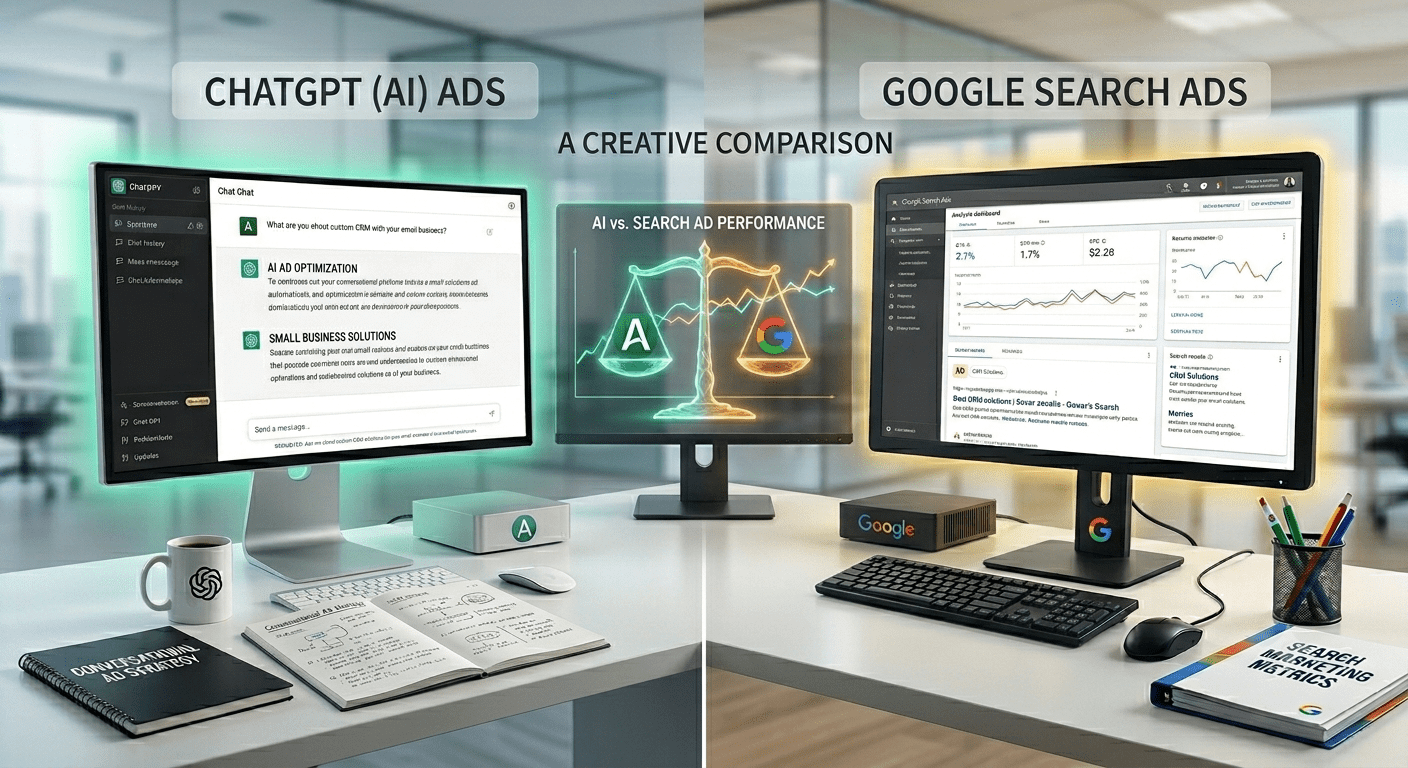
The primary distinction in ad formats when comparing ChatGPT Ads vs. Google Ads lies in their presentation. The table below outlines key differences:
| Ad Platform | Ad Format Characteristics |
| Google Search Ads | Predominantly text ads; concise, static snippets appearing above or below organic search results. Designed for quick scanning and direct clicks. |
| ChatGPT Ads (Envisioned) | More conversational and integrated; potentially appearing as part of the AI’s response or woven into the chat flow. Allows for a richer, more interactive and dynamic experience based on ongoing conversation. |
Targeting and Audience Reach
Targeting and audience reach also show significant differences between ChatGPT Ads and Google Search Ads. This allows for incredibly precise targeting of high-intent users actively searching for specific solutions. While ChatGPT Ads might represent a different type of intent (more focused on research and discovery rather than immediate purchase), it offers a unique opportunity to reach users engaging with AI for information, potentially before they even initiate a traditional Google Search, broadening the scope of an advertiser’s reach.
| Ad Platform | Targeting Criteria |
|---|---|
| Google Search Ads | Keyword queries, geographic location, demographics, past browsing behavior |
| ChatGPT Ads | Context of conversational queries within the ChatGPT platform |
Cost Structures of ChatGPT Ads vs. Google Ads
The cost structures of ChatGPT Ads vs. Google Ads are also likely to diverge. Google Ads operates on a bid-based system, predominantly cost-per-click (CPC), where advertisers pay each time a user clicks on their ad. Factors like keyword competition, ad quality, and bidding strategy heavily influence the Google Ads cost. While specifics for ChatGPT Ads are speculative, they might involve a different model, perhaps based on engagement metrics, conversational interactions, or a unique AI-driven pricing model. As an advertiser, understanding these potential differences in CPCs and overall campaign costs will be crucial for budget allocation and measuring the ROI of both platforms when considering adding ChatGPT Ads to your marketing mix or when you test ChatGPT Ads.
When Should You Use ChatGPT Ads?
Best Use Cases for ChatGPT Advertising
ChatGPT Advertising is particularly well-suited for businesses focused on early-stage customer engagement, research and discovery, and complex product or service explanations. This platform excels when users are asking ChatGPT to help them understand options or compare solutions, as the conversational format allows for detailed AI responses. Companies offering intricate services, high-value products requiring extensive consideration, or those in emerging markets where user education is key, can significantly benefit. Utilizing ChatGPT Ads helps in nurturing high-intent leads by providing comprehensive answers within the chat itself, making it an ideal choice for a nuanced approach to an AI ad strategy.
Advantages of Using ChatGPT Ads
The primary advantages of using ChatGPT Ads lie in their interactive and personalized nature, offering a unique opportunity for advertisers to engage deeply with potential customers. Unlike traditional text ads, ChatGPT Ads can adapt to user queries in real-time, providing tailored information that directly addresses their needs. This conversational approach fosters greater trust and understanding, potentially leading to higher conversion rates as users feel more informed and valued. Furthermore, the integration within AI platforms like ChatGPT means businesses can capture users during their initial research, influencing decisions before they even hit a traditional search engine, thus enhancing early-stage customer acquisition.
Conversion Tracking with ChatGPT Ads
Effective conversion tracking with ChatGPT Ads will be paramount for understanding campaign performance and optimizing future efforts. While the exact mechanics are still evolving, advertisers will need robust systems to monitor user interactions, click-throughs to landing pages, and subsequent conversions originating from conversational engagements. This might involve unique tracking pixels, API integrations with CRM systems, or sophisticated analytics that measure the impact of AI responses on the customer journey. Gathering comprehensive conversion data will enable businesses to refine their ChatGPT Ad strategies, ensuring that their investment in this innovative platform yields a measurable return and contributes positively to overall campaign optimization.
When Is It Appropriate to Use Google Search Ads?
Benefits of Google Search Ads
Google Search Ads remain an indispensable tool for businesses seeking to capture high-intent users actively searching for products or services. The immediate visibility provided by Google Ads campaigns directly addresses specific user needs, often leading to rapid conversions. Its extensive reach across the Google Search network ensures businesses can target a vast audience with precise keyword targeting, maximizing the relevance of each ad impression. Furthermore, Google’s mature optimization tools and detailed conversion tracking capabilities allow for continuous refinement, ensuring advertisers achieve optimal performance and a strong return on investment from their paid search efforts.
Verticals That Excel with Google Ads
Numerous verticals consistently excel with Google Ads due to the platform’s ability to connect immediate user intent with relevant solutions. Industries such as e-commerce, local services (plumbers, electricians, lawyers), software-as-a-service (SaaS), finance, and real estate often see significant success. These businesses benefit from users actively searching for specific products, local providers, or solutions to urgent problems. Google Ads isn’t just about broad reach; it’s about connecting with individuals at the moment they are most likely to convert, making it a critical component for businesses whose customer journey begins with a clear search query on Google Search.
Setting Up a Successful Google Ads Campaign
Setting up a successful Google Ads campaign requires a strategic approach that encompasses thorough keyword research, compelling ad copy, and robust conversion tracking. Advertisers should focus on selecting high-intent keywords, crafting clear and persuasive text ads that resonate with their target audience, and designing a user-friendly landing page that facilitates conversion. Continuous monitoring of Google Ads cost, per click performance, and optimization data is essential for refining bids, adjusting targeting, and improving overall campaign efficiency. The AD Leaf Marketing Firm specializes in orchestrating these elements to ensure your Google Search campaigns achieve maximum impact and deliver measurable results.
How to Decide Between ChatGPT Ads and Google Ads
Factors to Consider in Your Decision
Deciding between ChatGPT Ads and Google Ads requires a careful consideration of various factors, including your business objectives, target audience behavior, and budget. For businesses aiming for early-stage customer engagement and education, especially for complex offerings, ChatGPT Advertising might be more suitable due to its conversational nature. Conversely, if your primary goal is to capture high-intent users actively searching for specific solutions and drive immediate conversions, Google Ads campaigns are generally more effective. Understanding where your target customers are in their buying journey and what type of interaction they prefer is crucial for an informed decision when comparing ChatGPT Ads vs. Google Ads.
Comparing ROI: ChatGPT vs. Google Ads
Comparing the return on investment (ROI) for ChatGPT Ads vs. Google Ads involves evaluating different metrics due to their distinct ad formats and engagement models. Google Ads, with its mature conversion tracking and established CPC models, allows for straightforward ROI calculations based on clicks, conversions, and acquisition costs. For ChatGPT Ads, while specific ROI models are still evolving, the value might be measured through deeper user engagement, lead nurturing, and influencing decisions during the research and discovery phase, which may lead to a longer sales cycle but potentially higher-quality leads. Advertisers will need to carefully monitor conversion data and attribute value from both platforms to truly compare their effectiveness and optimize their overall paid search strategy.
Utilizing Both Platforms for Maximum Impact
For many businesses, the most impactful strategy will involve utilizing both platforms, creating a comprehensive digital advertising ecosystem. Google Ads can capture immediate, high-intent demand, while ChatGPT Advertising can engage users earlier in their journey, providing detailed information and building brand affinity through conversational interactions. This integrated approach ensures that businesses are present across various touchpoints, from initial AI-driven queries to direct search results, maximizing reach and conversion opportunities. The AD Leaf Marketing Firm recommends a diversified strategy, carefully balancing investment in both Google Search campaigns and emerging AI ad platforms like ChatGPT to achieve holistic growth and sustained success.
Key Takeaways
Summary of ChatGPT Ads vs. Google Search Ads
The core distinction between ChatGPT Ads and Google Search Ads lies in their approach to user engagement and ad formats. Google Ads excel at targeting high-intent users with specific search queries, delivering concise text ads directly on search results, driving immediate clicks and conversions. ChatGPT Ads, on the other hand, offer a conversational, integrated ad experience within AI platforms like ChatGPT, ideal for early-stage research and discovery, allowing for more detailed, interactive AI responses. While Google Ads is a proven powerhouse for direct response, ChatGPT offers a unique avenue for deeper engagement and education, particularly for complex products or services, utilizing AI to enhance the user experience.
Recommendations for Businesses
For businesses seeking to maximize their digital advertising efforts, The AD Leaf Marketing Firm recommends a strategic integration of both ChatGPT Ads and Google Ads. Use Google Ads campaigns to capture immediate demand and drive conversions from users actively searching for solutions. Simultaneously, consider adding ChatGPT Ads to your marketing mix for engaging users during their research and discovery phase, leveraging the conversational format to provide in-depth information and build brand awareness. This dual-platform approach ensures comprehensive market coverage, addresses varying stages of the customer journey, and capitalizes on the strengths of both established paid search and innovative AI-driven advertising.
Next Steps for Implementation
To implement an effective strategy leveraging both ChatGPT Ads and Google Ads, businesses should first conduct a thorough audit of their current marketing objectives and target audience behavior. Begin by optimizing your existing Google Ads campaigns for maximum efficiency and conversion tracking. Simultaneously, explore opportunities to test ChatGPT Ads, focusing on crafting compelling conversational content that resonates with users asking ChatGPT to help with their queries. The AD Leaf Marketing Firm can provide expert guidance in developing a cohesive strategy, setting up robust conversion tracking for both platforms, and continuously optimizing your campaigns to ensure measurable ROI and sustained business growth in the evolving digital landscape.
Frequently Asked Questions | The AD Leaf Marketing Firm
What are the main differences in targeting with ChatGPT Ads and Google Search Ads?
The main differences in targeting between ChatGPT Ads and Google Search Ads stem from their underlying platforms and user intent. Google Ads campaigns primarily target users based on explicit keyword queries, demographics, geographic location, and remarketing lists, capturing high-intent individuals actively searching for specific products or services. In contrast, ChatGPT Ads would likely target users based on the context of their conversational queries within the ChatGPT environment, focusing on their research and discovery phase. This means Google Ads excels at direct response from clear intent, while ChatGPT Advertising targets users earlier in their decision-making process through more nuanced, conversational engagement.
How do I track conversions for ChatGPT Ads?
Tracking conversions for ChatGPT Ads will involve adapting traditional conversion tracking methods to the conversational format. While specific tools from OpenAI are still evolving, advertisers can anticipate using unique tracking pixels on landing pages linked from ChatGPT responses, API integrations with CRM systems to monitor leads generated through AI interactions, and sophisticated analytics to attribute value to conversational engagements. The goal is to measure user actions post-interaction with a ChatGPT ad, such as website visits, form submissions, or purchases, to ensure accurate conversion data. This allows for comprehensive optimization and understanding of the ROI for your ChatGPT ad spend.
What is the average cost of Google Ads compared to ChatGPT Ads?
The average cost of Google Ads varies widely depending on industry, keyword competition, and bidding strategy, typically operating on a cost-per-click (CPC) model. Highly competitive keywords can result in higher CPCs, impacting the overall Google Ads cost. For ChatGPT Ads, while specific pricing models are yet to be fully established by OpenAI, they may involve different metrics beyond simple clicks, possibly based on engagement, conversational length, or unique AI-driven pricing. As advertisers begin to test ChatGPT Ads, it will be crucial to compare these cost structures and per click performance to effectively manage budgets and project ROI for both platforms.
Can I use both ChatGPT Ads and Google Ads for my marketing strategy?
Absolutely, using both ChatGPT Ads and Google Ads in a combined marketing strategy can provide comprehensive coverage and maximize impact. Google Ads campaigns excel at capturing immediate, high-intent demand from users actively searching for solutions, driving quick conversions. ChatGPT Advertising can engage users earlier in their customer journey during the research and discovery phase, offering detailed conversational responses and building brand awareness. This integrated approach ensures your business is visible across various touchpoints, from initial AI queries to direct search results, effectively nurturing leads through different stages of the sales funnel and leveraging the unique strengths of each platform.
What industries benefit most from ChatGPT Advertising?
Industries that benefit most from ChatGPT Advertising are typically those with complex products or services, requiring extensive research, explanation, or comparison. This includes sectors like technology (SaaS, AI tools), education, finance, healthcare, and high-value B2B services. Businesses whose target audience often asks ChatGPT to help them understand options or needs detailed information will find the conversational format highly effective. ChatGPT Ads are ideal for fostering deeper engagement, educating potential customers during their research and discovery phase, and influencing purchasing decisions long before they enter the high-intent search phase that Google Ads excels at.
How can The AD Leaf Marketing Firm help with my ad campaigns?
The AD Leaf Marketing Firm specializes in developing and executing comprehensive digital advertising strategies, including both Google Ads campaigns and emerging AI ad opportunities like ChatGPT Advertising. Our expertise covers everything from meticulous keyword research and compelling ad formats to robust conversion tracking and continuous optimization. We help businesses navigate the complexities of paid search, ensuring optimal Google Ads cost and per click performance, while also strategically exploring how to use ChatGPT and test ChatGPT Ads to leverage AI for early-stage customer engagement. Partner with us to build a diversified, results-driven ad strategy that maximizes your ROI across all relevant platforms.
Key Takeaways
- If you're a business owner grappling with underperforming marketing efforts or struggling to achieve scalable growth, understanding the nuanced differences between emerging AI-driven solutions and established giants is crucial.
- This article will provide a comprehensive comparison between ChatGPT Ads and Google Search Ads, helping you determine which platform, or combination thereof, is the right strategic fit for your unique business objectives.
- The AD Leaf Marketing Firm is ready to partner with you to implement the ideal strategy.
- What Are ChatGPT Ads and Google Search Ads?
- Understanding ChatGPT Ads ChatGPT Ads represent a new frontier in AI-driven advertising, where ad formats are deeply integrated within conversational AI interfaces.
